

































US Strikes Iran, Oil Tanker Hit Amid Escalating Tensions
The geopolitical landscape in the Middle East has been dramatically reshaped by a series of aggressive actions, with the United States launching significant air strikes on an Iranian ammunition depot, reportedly holding enriched uranium. This development occurred concurrently with a major oil tanker being struck by an Iranian drone near the strategically vital Strait of Hormuz, igniting fears of wider conflict and severe economic repercussions.

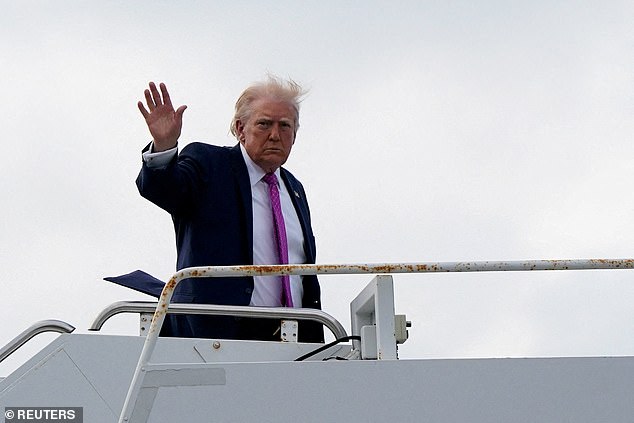
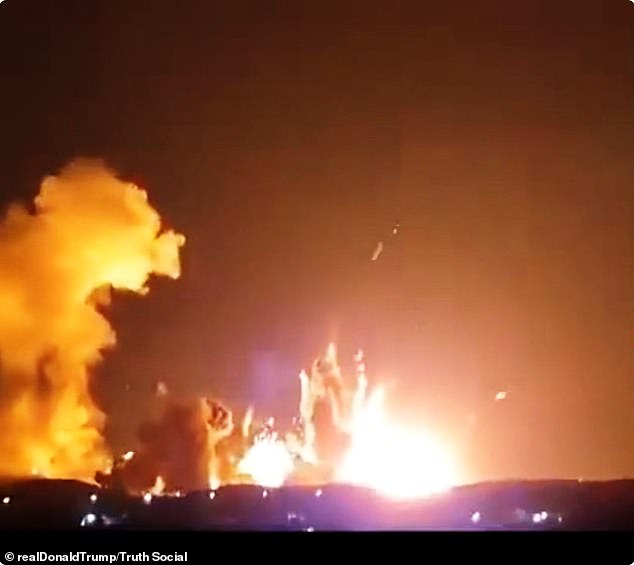
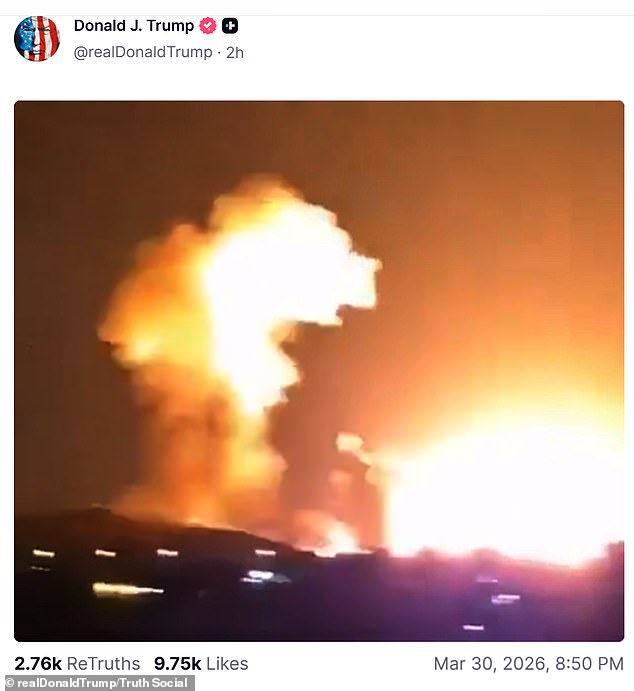
Former President Donald Trump took to his Truth Social platform to share footage of the US strike in the city of Isfahan. The video depicted the deployment of 2,000lb bombs, which subsequently caused a chain reaction of explosions illuminating the night sky. While the accompanying post offered no specific details regarding the immense blasts, an American official subsequently confirmed to The Wall Street Journal that the footage indeed captured bunker buster strikes targeting Isfahan.
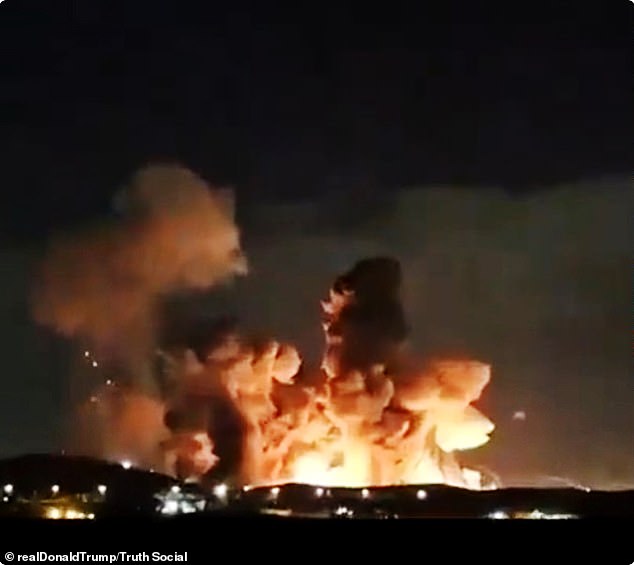
These US strikes were reportedly considered in response to intelligence suggesting that enriched uranium stockpiles at Iranian sites, including Isfahan, were being prepared for potential seizure by special operations forces. Satellite imagery from NASA, tracking thermal anomalies, indicated that the explosions occurred in proximity to Mount Soffeh, an area understood to house military installations. The visual evidence from the videos showcased colossal fireballs and secondary explosions, characteristic of munitions detonating, creating a spectacular and destructive inferno. To date, Iran has not issued a formal acknowledgement of the attack. Isfahan is a significant location, hosting one of the three uranium enrichment sites previously targeted by US forces during a 12-day conflict with Israel in June of the preceding year.
Tanker Attack Fuels Oil Spill Concerns
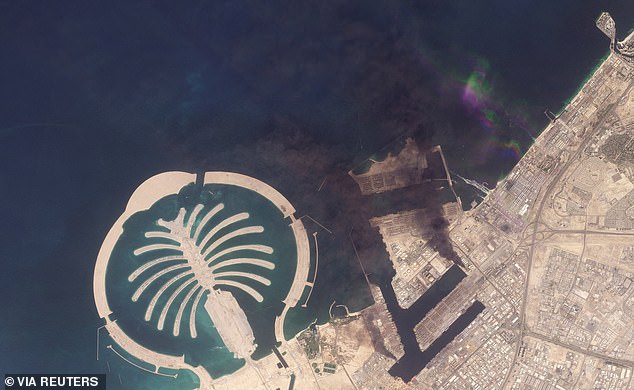
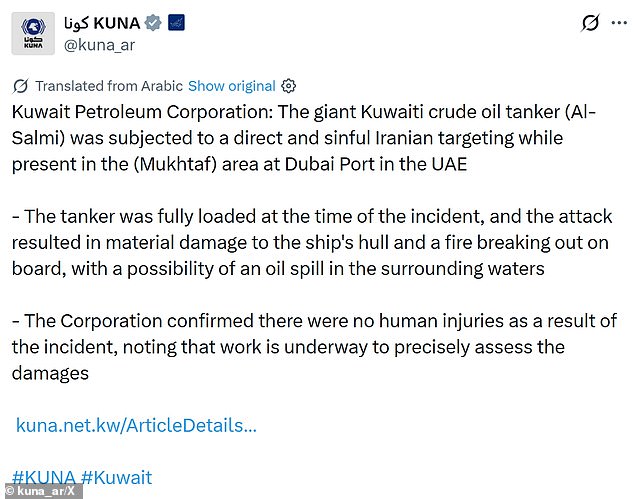
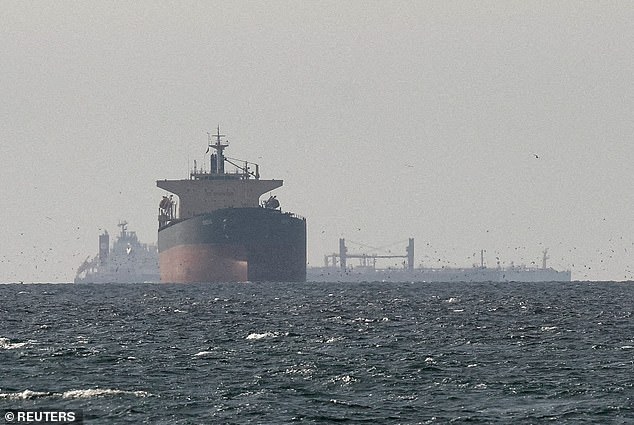
In a parallel development, amidst the bunker buster offensive against Isfahan, a fully laden Kuwaiti oil tanker, the Al Salmi, carrying an estimated two million barrels of oil, was struck by an Iranian drone near the Strait of Hormuz. This incident has heightened anxieties about a potential oil spill in the already volatile Persian Gulf.
Kuwait Petroleum Corporation (KPC) confirmed on Tuesday that the Al Salmi tanker was attacked while anchored at Dubai port in the United Arab Emirates. The strike inflicted damage on the vessel and ignited a fire onboard. KPC issued a stark warning about the possibility of an oil slick contaminating the surrounding waters, as reported by the Kuwaiti state news agency KUNA.
Dubai authorities confirmed that maritime firefighting units successfully extinguished the blaze, which originated from the drone attack. They are currently assessing the full extent of the damage, with no reported injuries. All 24 crew members were confirmed to be safe.
In the wake of the news, Brent crude futures saw an initial surge of over 2 per cent, reaching $115.17 per barrel in early Asian trading. However, prices experienced a slight retreat following reports that Mr. Trump might be amenable to ending the conflict, even if the Strait of Hormuz remained closed. KPC is actively engaged in assessing the damage to the tanker, which, according to Lloyd’s List Intelligence data, is owned and commercially operated by a subsidiary of KPC.
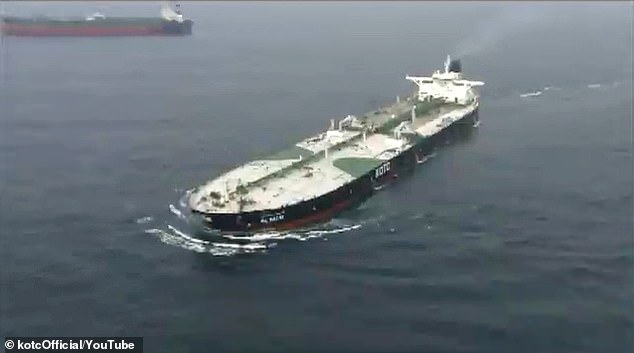
The Al Salmi tanker was laden with two million barrels of oil sourced from Kuwait and Saudi Arabia, according to data compiled by Lloyd’s and TankerTrackers. Its listed destination was Qingdao, China. Iranian officials were not immediately available for comment, and the attribution of the strike to Iran has not yet been independently verified.
Gulf Allies Urge Continued Military Action
The escalating situation unfolds as key Gulf allies of the United States, notably Saudi Arabia and the United Arab Emirates, are reportedly urging Mr. Trump to persist with military operations against Iran. These allies contend that Iran has not been sufficiently weakened by the month-long campaign, according to US, Gulf, and Israeli officials.
While initially expressing private reservations about insufficient advance notice of the US-Israeli offensive and voicing concerns about its potential regional ramifications, some of these regional partners are now presenting a case to the White House that the current moment represents a unique opportunity to cripple Iran’s clerical leadership permanently.
Officials from Saudi Arabia, the United Arab Emirates, Kuwait, and Bahrain have privately communicated their desire for the military operation to continue until significant changes occur in Iran’s leadership or its behaviour demonstrably shifts, according to officials speaking anonymously as they were not authorised to comment publicly.
This advocacy from Gulf nations comes as Mr. Trump appears to be oscillating between claims of diplomatic progress with Iran’s leadership and threats of further escalation.
Threats of Widespread Destruction Loom
Earlier in the week, Mr. Trump had threatened widespread destruction of Iran’s energy infrastructure and other vital facilities, potentially including desalination plants crucial for drinking water, if a deal to end the conflict was not reached swiftly. Concurrently, Iran has reportedly struck a significant water and electrical plant in Kuwait, and an oil refinery in Israel has also come under attack.
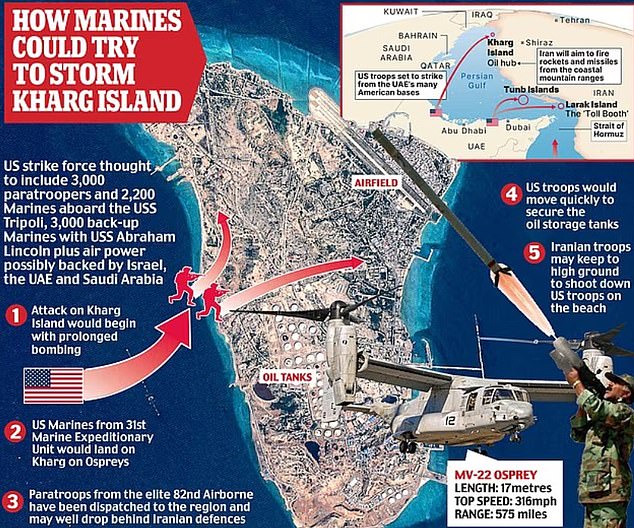
The US and Israel have initiated a new wave of strikes against Iran, as the conflict shows no signs of abating. Previous statements to the Financial Times had suggested that American forces might target Iran’s Kharg Island oil export hub. Mr. Trump has consistently asserted diplomatic progress, despite Tehran’s denials of direct negotiations, while simultaneously intensifying his threats and deploying thousands of additional US troops to the Middle East.
In an interview with the New York Post, Mr. Trump stated that the US was engaged in negotiations with Iran’s parliament speaker, Mohammad Bagher Qalibaf. Qalibaf, a former Revolutionary Guard commander who has engaged in online sparring with the US, had previously dismissed talks facilitated by Pakistan as a pretext for further American troop deployments.
Despite these assertions, Mr. Trump posted on social media that “great progress is being made” in talks aimed at ending military operations. However, he reiterated that if a deal was not struck “shortly,” and if the Strait of Hormuz was not immediately reopened, the US would escalate its offensive by “completely obliterating” power plants, oil wells, Kharg Island, and potentially even desalination plants. The Strait of Hormuz is a critical maritime chokepoint, through which approximately one-fifth of the world’s oil is transported during peacetime.
Legal scholars note that international laws of armed conflict permit attacks on civilian infrastructure, such as energy plants, only if the anticipated military advantage demonstrably outweighs the potential harm to civilians. This threshold is considered exceptionally high, and causing excessive civilian suffering can constitute a war crime. The US has already targeted military positions on Kharg Island. Iran, in turn, has threatened to launch ground invasions of Gulf Arab countries and to mine the Persian Gulf should US troops set foot on its territory.
Iranian Foreign Ministry spokesman Esmail Baghaei stated that Tehran had received a 15-point proposal from the Trump administration containing “excessive, unrealistic and irrational” demands, while simultaneously denying any direct talks. Qalibaf, the parliament speaker with whom Mr. Trump claims to be negotiating, was quoted by state media as saying Iranian forces were “waiting for the arrival of American troops on the ground to set them on fire and punish their regional partners forever.”
Notably, during Mr. Trump’s second term, the US has launched attacks against Iran twice during high-level diplomatic engagements, including the strikes on February 28 that initiated the current conflict. These attacks followed Mr. Trump’s public statements about his ability to “take the oil in Iran” and his assertion that he could invade Kharg Island “easily.”
The number of US troops stationed in the Middle East has now swelled to approximately 50,000, an increase of around 10,000 from the usual contingent. Tehran has vowed to retaliate severely against American soldiers if the US President orders a ground invasion of the country. This comes after the Pentagon reportedly drew up plans for potential raids on Kharg Island, Iran’s primary oil export hub, and attacks on coastal sites near the Strait of Hormuz.
In an interview with the Financial Times, Mr. Trump expressed his “preference would be to take the oil,” drawing a parallel to the US approach in Venezuela, where Washington aims to control the oil industry “indefinitely” following the capture of President Nicolás Maduro in January. His remarks coincided with the US-Israeli war against Iran entering its fifth week, exacerbating the regional crisis and driving oil prices up by over 50 per cent within a month.
On Monday morning, Brent crude prices surpassed $116 a barrel in Asian trading, nearing their highest point since the conflict commenced on February 28. Mr. Trump candidly stated, “To be honest with you, my favorite thing is to take the oil in Iran but some stupid people back in the US say: ‘Why are you doing that?’ But they’re stupid people.” Such an operation would necessitate raiding Kharg Island, described as the “crown jewel” of the regime, where approximately 90 per cent of Iran’s oil is loaded onto tankers. The deployment of 2,500 Marines and an additional 2,500 sailors has maintained the US troop presence in the Middle East above 50,000. Last week, the Pentagon also dispatched approximately 2,000 soldiers from the Army’s 82nd Airborne Division to the region, providing Mr. Trump with additional military options. This move contrasts with earlier promises by Mr. Trump that he was “not putting troops anywhere,” amidst apparent divisions within his political base regarding foreign military engagements and the necessity of congressional approval.



















