

































Sardinia: Beyond the Crowds, Discovering the Island’s Hidden Gems

While Sardinia’s dazzling beaches, from the northern archipelago of La Maddalena to the eastern coves of the Gulf of Orosei, draw millions of visitors each year – a staggering five million arrivals were recorded in 2025, equating to nearly 22 million overnight stays – the island offers far more than just its famous coastlines. For those seeking to escape the bustling tourist hubs, Sardinia holds a wealth of tranquil corners and authentic experiences waiting to be explored.
Having spent two decades living between Rome and Asia, a recent return to my hometown of Ghilarza, nestled in the heart of Sardinia, has ignited a passion for rediscovering the island. My work as a travel consultant has become a perfect excuse to delve into Sardinia’s lesser-known treasures, uncovering some of its best-kept secrets.
The Rugged Charm of the Sinis Peninsula
The west coast, particularly the area around San Giovanni di Sinis and the Sinis Peninsula, has become my go-to escape. This rugged stretch of land, approximately 15 kilometres in length, boasts numerous beaches kissed by turquoise waters, but its allure extends far beyond its sandy shores.
Part of the municipality of Cabras, a town that gained international attention in the 1970s with the discovery of the monumental Neolithic sculptures known as the Giants of Mount Prama, the Sinis region is steeped in millennia of history.
On a clear, sunny day, a walk from the rocky beach of San Giovanni di Sinis is a journey through time. You’ll pass the evocative ruins of Tharros, a testament to Sardinia’s ancient past. This once-thriving settlement showcases layers of history, having served as a Carthaginian port, a Roman city, a Byzantine hub, and even the first capital of the Judicate of Arborea in the Middle Ages. It stands as a powerful reminder of the ancient Sardinians’ extensive trading networks across the Mediterranean.
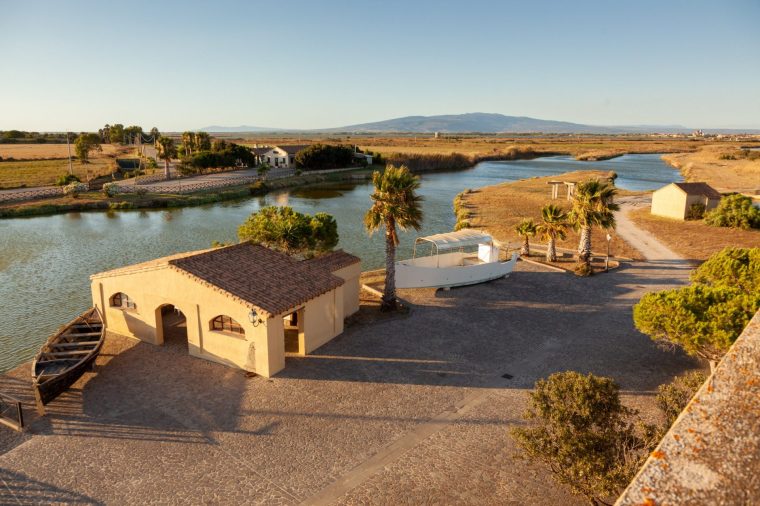
The hike south towards Capo San Marco is refreshingly manageable, and on a fine day, it culminates in a dip in some of the most breathtakingly turquoise waters imaginable. For the more adventurous, local operators like Sea Wreck Escursioni offer snorkelling tours (around €65 per person). These excursions provide a unique opportunity to explore underwater remnants of ancient Tharros, alongside the intriguing wrecks of a small pre-war steamship and a tugboat.
A Medieval Ghost Town and a “Most Beautiful Village”
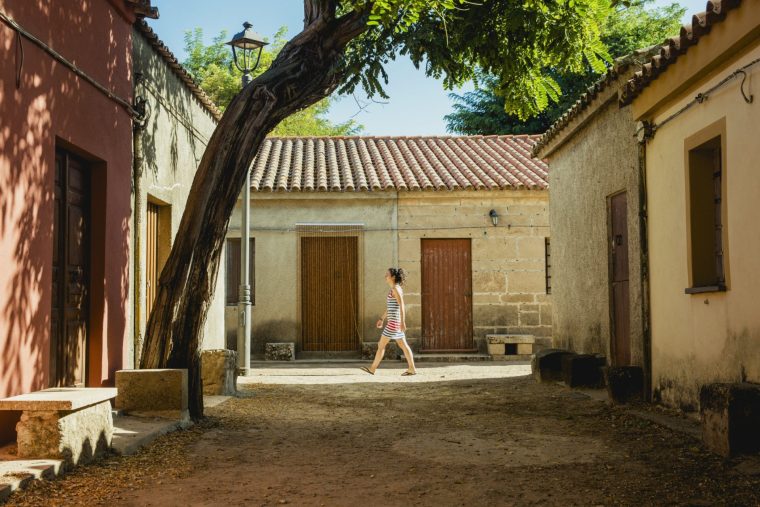
A short, approximately 20-minute drive north of San Giovanni di Sinis lies the captivating medieval ghost town of San Salvatore di Sinis. Here, charming single-storey, pastel-coloured houses line narrow, sandy streets, evoking a distinct Wild West atmosphere that has even served as a backdrop for spaghetti western films. Within the hamlet, the 17th-century Church of San Salvatore is a must-see, with its intriguing underground Nuragic temple dating back to the Bronze Age.
Continuing further north, you’ll discover Bosa, a village rightfully recognised as one of Italy’s “most beautiful villages” (Borghi più belli d’Italia). The vibrant houses of Sa Costa, the historic centre, are overlooked by the imposing medieval Malaspina Castle. The marina here offers a more serene and less crowded alternative to the popular town of Alghero. While Bosa can certainly buzz with activity during the summer months, visiting during the shoulder season provides the perfect opportunity for a peaceful stroll through this former fishing village.
Inland Treasures: Art, Tradition, and Natural Springs
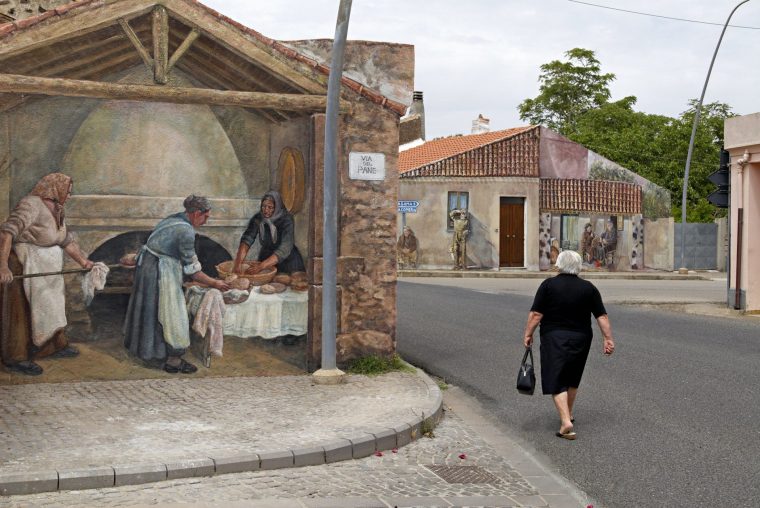
What truly sets this part of Sardinia apart for me is the abundance of fascinating inland settlements, all within a short driving distance of each other. The village of Tinnura, adorned with vibrant street art, is a delightful surprise. Equally captivating is Santu Lussurgiu, a picturesque medieval town where traditional crafts are not merely tourist novelties but an integral and authentic part of local life.
Perched on the verdant, forested slopes of the extinct volcano Montiferru, Santu Lussurgiu is home to a mere 2,000 residents. The town is renowned for its skilled artisans who produce handcrafted knives, intricately carved wooden storage benches, and high-quality leather horse saddles. Local culinary delights include the distinctive casizolu cheese and the potent mirto (myrtle liqueur). Wandering through its cobbled alleyways has an almost magical ability to transport you back to an older, more traditional Sardinia.
While Santu Lussurgiu itself boasts numerous natural springs, my personal ritual involves a stop at the 12th-century ghost village of San Leonardo. Here, surrounded by lush forest, I refill my water bottle from its mineral springs. It’s these unique attractions, combined with the island’s stunning beaches and charming towns, that truly capture the essence of authentic Sardinia, offering an escape from the crowds and a genuine connection to the island’s soul.
Planning Your Sardinian Adventure
Getting There:
The region is conveniently located approximately a 90-minute drive from Cagliari, Sardinia’s capital city.
Where to Stay:
* Hotel Lucrezia, Riola Sardo: Doubles from €220. Visit hotellucrezia.com/en/
* L’Alga B&B, Cabras: Doubles from €108. Visit beb.it/algacabras/en/
* Torremana Guesthouse, Cabras: Doubles from €84. Visit www.torremana.it
* Hotel La Baja, Santa Caterina di Pittinuri: Doubles from €180. Visit felixhotels.it/en/hotel-la-baja-santa-caterina-di-pittinuri



















