

































Millionaires Voice Concerns Over Proposed Queen Elizabeth II Memorial in St James Park
Plans for a significant memorial to commemorate the late Queen Elizabeth II in London’s prestigious St James Park have sparked a debate, with some wealthy residents expressing strong opposition. While architects hail the project as an “exceptional opportunity to commemorate and celebrate a figure beloved worldwide,” those living in the exclusive Queen Anne’s Gate area fear the memorial could inadvertently lead to an increase in crime and anti-social behaviour.

The proposals, submitted to Westminster City Council, include not only a statue of the late monarch but also a new bridge within the historic park. The Queen Anne’s Gate Residents Association, representing the affluent locals, has lodged a firm objection, citing a range of concerns that they believe will negatively impact the area.
Residents’ Worries: Crime, Congestion, and Conservation
The association’s primary apprehension revolves around the potential for increased criminal activity. They have specifically highlighted fears of:
- Rough Sleeping: New spaces created by the memorial’s design could become havens for overnight sleeping.
- Illegal Cycling: Increased footfall and activity may exacerbate existing issues with illegal cycling within the park.
- Muggings: The creation of new “hiding spaces” is a particular concern for residents worried about personal safety.
These concerns are not without statistical backing. According to police data, the St James’s area recorded a substantial number of incidents in January alone, with 1,078 instances of theft and anti-social behaviour. Over the past twelve months, the total number of such incidents reached a staggering 14,986.
Beyond crime, the residents also anticipate a surge in tourism, which they argue would be detrimental to the Grade I-listed park. They foresee “congestion chaos” and believe the increased visitor numbers would inflict “harm” on the meticulously maintained green space.
Furthermore, the association has questioned whether the late Queen herself, known for her “thrift and frugality,” would have approved of a project involving significant construction and ongoing maintenance costs.
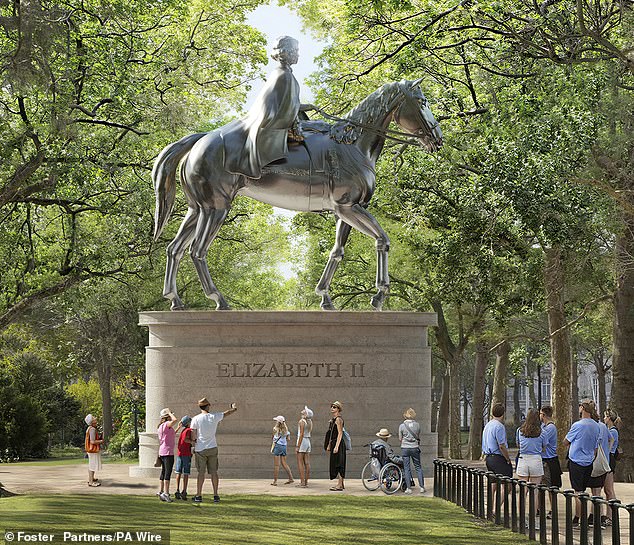
The architects behind the memorial, Fosters and Partners, won a competition last year to design this national tribute. The proposed monument will be situated at the end of a glass bridge in a section of the park to be known as Queen Elizabeth II Place at Malborough Gate, conveniently located close to Buckingham Palace. The sculptor selected for the statue is Martin Jennings, an artist with a notable portfolio, including a bust of the late Queen Mother at St Paul’s Cathedral and the first crowned coinage portrait of King Charles III.
Conservationists and Council Response
The debate extends to conservationists, who have alleged that their critiques were not adequately addressed during the public consultation phase.
Despite these objections, Westminster City Council has granted conditional approval for the plans, just shy of two months after their submission. The council’s stance is that any potential “harm is fully outweighed by the substantial public benefits of the scheme” in creating a “national memorial of great importance.”
A government spokesperson echoed this sentiment, describing the Queen Elizabeth Memorial as a “beautiful space for people to come together to reflect on and celebrate our longest-reigning Monarch.” They added that the “final plans are subject to an ongoing planning process.”
Westminster City Council has declined to comment further due to the ongoing nature of the planning process. Enquiries to the Metropolitan Police and the Cabinet Office for their comments have also been made. The area surrounding St James Park is renowned for its historical significance and its “best of their kind in London” 18th-century properties, which have historically attracted a host of distinguished residents, including Sir Mansfield Smith-Cumming, the founder of MI6, and music icon Sting. The proposed memorial is set to add another layer to the park’s rich tapestry of history and commemoration.



















