

































Sydney Battles Wild Weather: Flights Cancelled, Thousands Lose Power
Sydney, Australia – A severe weather system, described as a once-in-50-year storm, has wreaked havoc across Sydney and the New South Wales coast, leading to widespread flight cancellations and delays, and leaving thousands of homes and businesses without power. Damaging winds lashed the city as a low-pressure system tracked north along the east coast over the weekend, disrupting travel plans and posing significant risks to coastal communities.

Air Travel Disrupted
Sydney Airport experienced considerable disruption to its flight schedule. By Friday evening, the airport confirmed that approximately 50 flights already airborne faced landing delays, while another 40 scheduled departures were cancelled. As weather conditions worsened throughout Friday night and into Saturday morning, the situation escalated, with at least an additional 50 domestic flights experiencing cancellations or delays up until 10:30 am on Saturday.
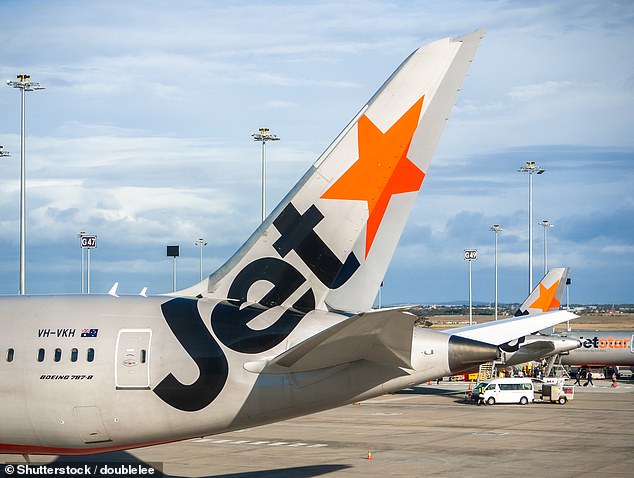
Among the affected services, two Jetstar flights were noted as cancelled on Saturday. Both Qantas and Virgin Australia services were impacted by the adverse weather and the temporary necessity of single runway operations on Friday. However, by Saturday morning, these runway restrictions had been resolved.
A spokesperson for Virgin Australia stated, “Virgin Australia’s operations in Sydney are running as scheduled today. We continue to monitor operating conditions closely. We thank guests for their patience and encourage anyone travelling to check the status of their flight via our website or app prior to travel.”
In response to the disruptions, Qantas implemented measures to assist affected passengers. A Qantas spokesperson confirmed that larger aircraft were deployed on Saturday to accommodate more passengers, including the use of an Airbus A330 for services to Melbourne and Sydney. By Saturday afternoon, flight operations at Sydney Airport had largely returned to normal, with all runways fully operational.
Coastal Hazard Warnings and Dangerous Surf
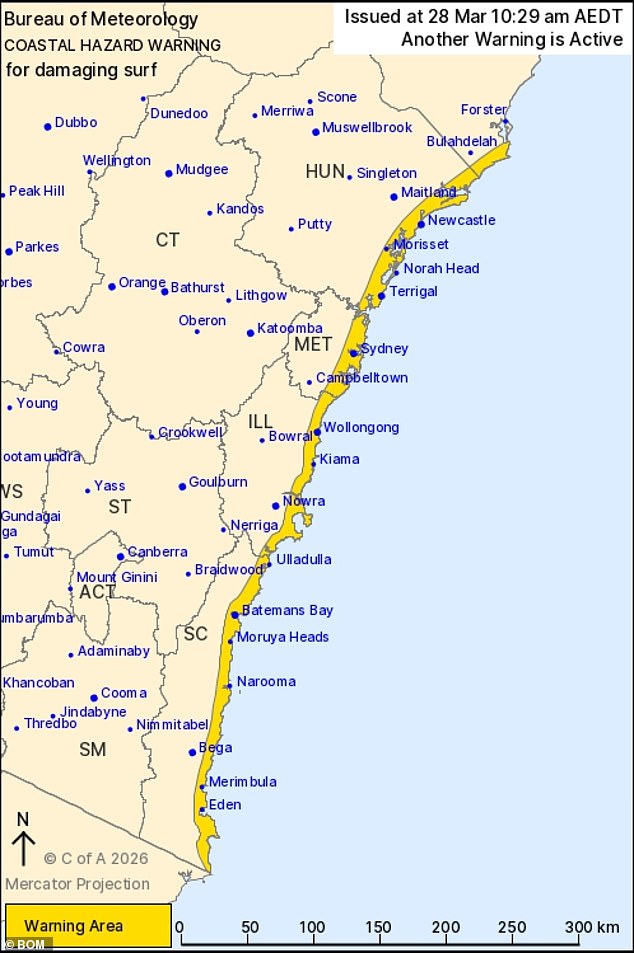
The severe weather extended far beyond the airport, prompting a broad coastal hazard warning for an 800-kilometre stretch of the New South Wales coast. This warning encompassed areas from Seal Rocks, south of Forster, all the way down to the Victorian border. Furthermore, gale warnings issued by the Bureau of Meteorology covered the region from the Hunter Coast to the Eden Coast as of 2 pm on Saturday, including the greater Sydney area.
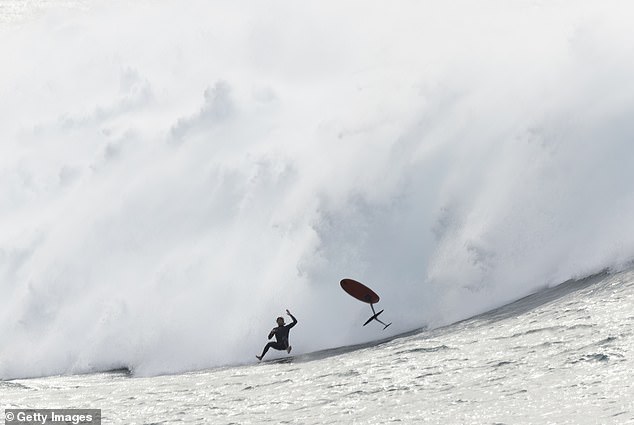
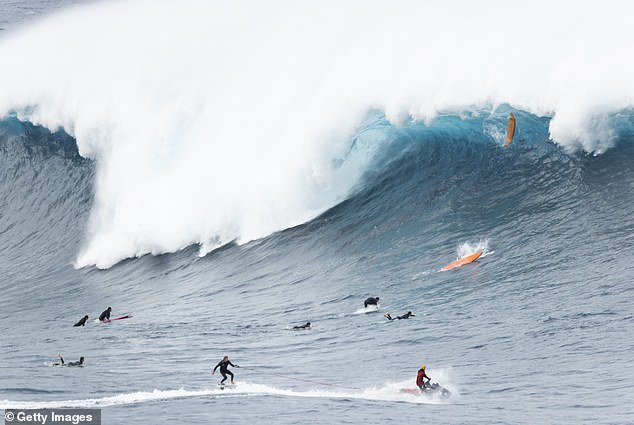
The Bureau of Meteorology cautioned residents, stating, “Beach conditions in these areas could be dangerous and people should stay well away from the surf and surf-exposed areas.” The ferocity of the waves was significant, with recordings of up to 8 metres on the Eden coast near the NSW-Victoria border at 1 pm on Friday. Sydney also experienced substantial wave action, with a 5.7-metre wave recorded at 2 am on Saturday.
Steven Pearce, the chief executive of Surf Life Saving, highlighted the severity of the conditions, telling media outlets that the state would witness “swells we haven’t seen in decades up and down the coastline.” He added, “It really is going to be a hazardous and ferocious weekend for anyone going down near the coastline.”
Emergency Services Respond to Widespread Damage
The New South Wales State Emergency Service (SES) was inundated with calls for assistance, responding to 591 incidents in the 24 hours leading up to 2 pm on Friday. The majority of these incidents were concentrated in Dubbo and Sydney’s Northern Beaches. The strong winds were responsible for numerous fallen trees and significant damage to homes and essential infrastructure.
In Dubbo, wind gusts reached an alarming speed of up to 115 km/h, causing extensive damage throughout the town. A particularly dramatic incident saw a crane collapse in the central business district at the peak of the storm.
Dean Storey, NSW SES State Duty Commander, issued a statement on Friday emphasizing the ongoing risks. “Even though the thunderstorms have passed, this system is now bringing a different set of risks with strong winds and dangerous surf expected right along the coast,” he said.
The SES urged the public to take precautions:
* During strong winds: Stay indoors, keep clear of trees and powerlines, and secure any loose items around your home that could become airborne.
* Near the coast: Avoid boating, exposed beaches, rock platforms, and ocean pools. The SES stressed that conditions are too dangerous for any activity in, on, or around the open ocean.



















