JFK’s Personal Secretary: A ‘Political Murder’ Orchestrated from Within Government
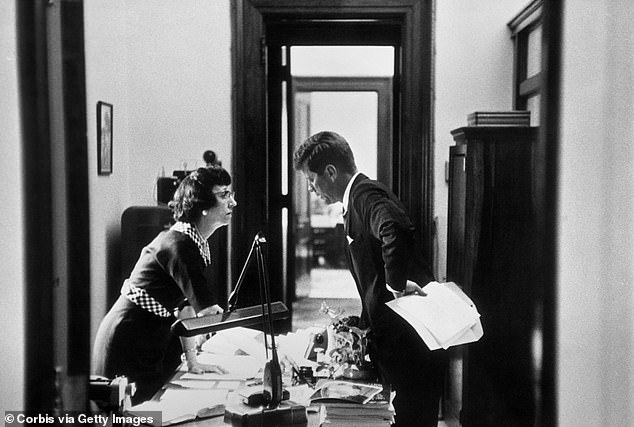
Evelyn Lincoln, the long-time personal secretary to President John F. Kennedy and a trusted confidante, believed her boss was the victim of a carefully orchestrated “political murder” planned by individuals within the US government. This deeply held conviction, previously unpublished, has emerged from a document unearthed in the JFK Library in Boston by JFK Facts, an organisation dedicated to examining the assassination.

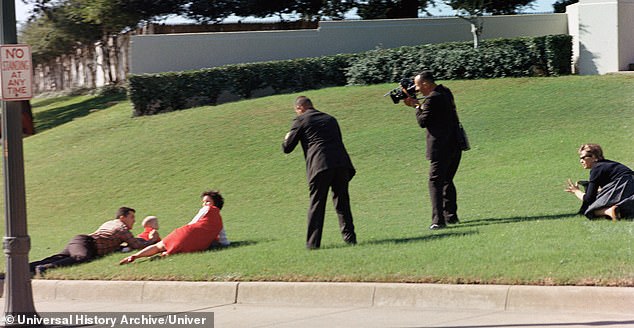
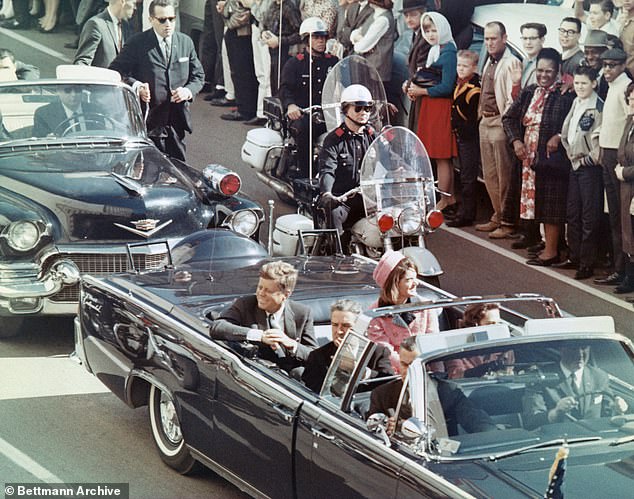
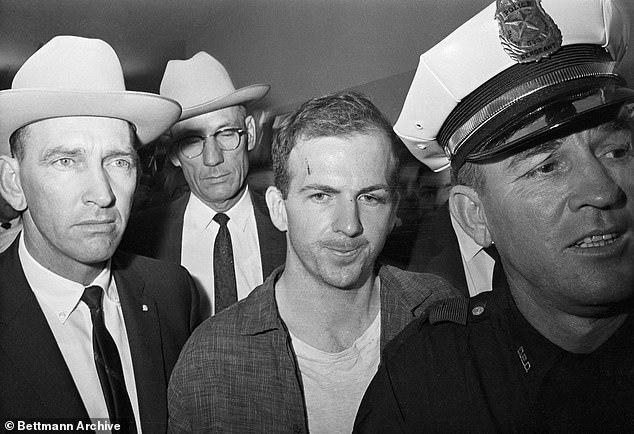
Lincoln, who served as Kennedy’s White House gatekeeper and was present in the third car of his motorcade on that fateful day in Dallas, Texas, on November 22, 1963, maintained this belief until the end of her life. Her posthumous insights, detailed in an 11-page addendum to an unpublished memoir, suggest that Lee Harvey Oswald was not the sole perpetrator, but rather a pawn in a much larger, more sinister conspiracy.
Jefferson Morley, editor of JFK Facts and a leading authority on the assassination, posits that Lincoln’s intimate proximity to President Kennedy lends significant weight to her views. “She was a very loyal person,” Morley explained. “She had turned her mind and her work to him, she served him. And so, yes, I think this thinking does reflect how he would think about this event himself.” He further noted the value of her testimony, stating, “She wrote this at the end of her life and never published it, it’s not quite clear why, so I think it’s valuable testimony from somebody who was very close to JFK.”
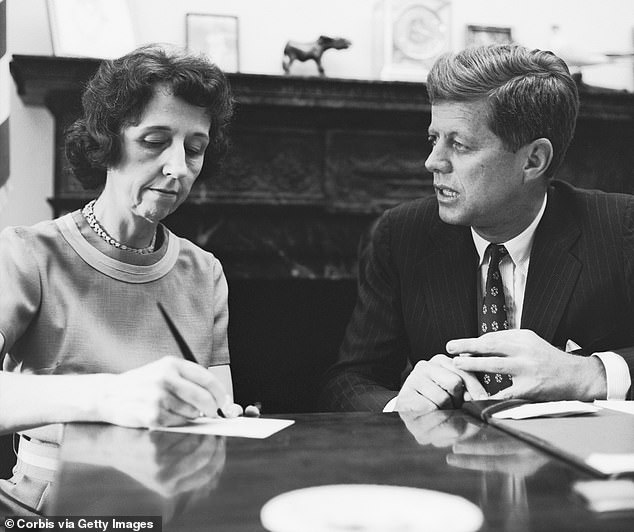
Lincoln, who passed away in 1995 at the age of 85 and is buried in Arlington Cemetery, had maintained a public silence about her true opinions regarding her boss’s assassination throughout her lifetime. However, in her unpublished memoir, titled ‘I Was There,’ she detailed her reasoning behind the belief that Kennedy’s death was the result of a deliberate, professional political assassination.
A Conduit to Power: Lincoln’s Close Relationship with JFK
The daughter of a congressman, Evelyn Lincoln began her service to John F. Kennedy in the early 1950s during his first US Senate campaign. Over the years, she became his indispensable personal secretary, a vital link in an era long before mobile phones. Her Secret Service codename was “Willow.”
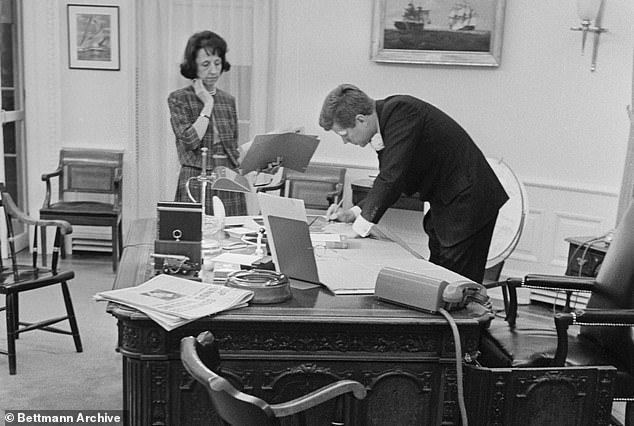
“He (President Kennedy) insisted that I know exactly where he was and with whom at all times,” Lincoln wrote. “I became the one link to whom everyone turned, the family, the friends, the important people, if they wanted to talk to him or leave messages for him. It, therefore, became very important that I know his whereabouts. I always had the telephone number where he could be reached, and he had a telephone number in case he wanted to call me.”
This close working relationship allowed Lincoln to witness firsthand the President’s thoughts and concerns, including his musings about potentially replacing Vice President Lyndon Johnson as his running mate in the 1964 election.
Unravelling the Conspiracy: Suspect Factions and Motivations
In her unpublished addendum, Lincoln meticulously explored various factions that harboured grievances against President Kennedy. These included:
- Far-right extremist groups: Known for their opposition to Kennedy’s policies.
- Organised crime: Particularly those with operations in Cuba that were impacted by the revolution.
- “Texans who hated him”: Referring to political adversaries within the state.
- Teamsters boss Jimmy Hoffa: Who had a contentious relationship with the Kennedy administration.
- FBI Director J. Edgar Hoover: Known for his deep animosity towards the Kennedys.
- The Ku Klux Klan: An organisation with a history of violent opposition to civil rights.
- Anti-civil rights organisations: Which viewed Kennedy’s progressive stance with hostility.
- Communists: Though Lincoln’s focus seemed more on those who felt betrayed by US policy.
She also discussed Madame Nhu, the influential figure in South Vietnam, who was actively campaigning against President Kennedy’s policies regarding the Vietnam War during her travels across the United States in November 1963.
Lincoln found it “ironic” that so many of these antagonistic factions had representatives present in or around Dallas at the time of the assassination. She reasoned that “Any one of these factions… could have hired a hit man. I have heard that they come dime a dozen. Likewise, the atmosphere in Dallas at the time was filled with hatred and suspicion. The time was ripe to pull this off.”
The Shadow of Cuba: Bay of Pigs and Its Aftermath
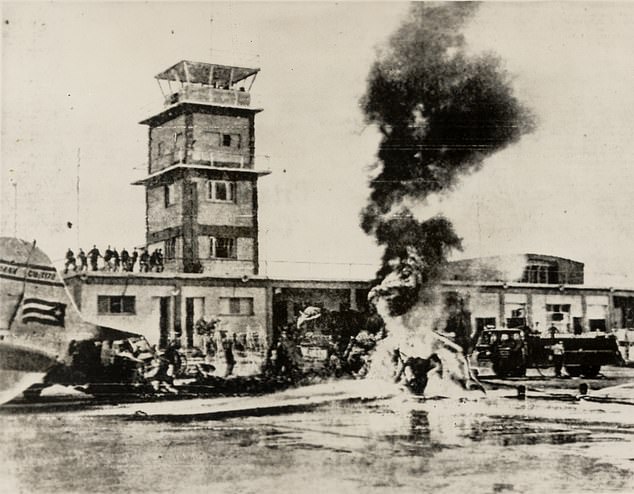
A central theme in Lincoln’s conspiracy theory revolved around Kennedy’s handling of the Bay of Pigs invasion and his subsequent stance on Cuba. She detailed how the Eisenhower administration, influenced by figures like Richard Nixon, a staunch anti-communist, had developed the Bay of Pigs plan. This plan was then passed to Kennedy, who ultimately approved it.
However, Kennedy’s decision to cancel an air strike during the invasion led to its failure, infuriating the Cuban exiles who formed the invasion force, known as Brigade 2506. Lincoln wrote, “The President, when it became apparent that the plan would fail, unless there was American military intervention, called the operation off.” This decision, she argued, “antagonized the Cuban exiles and the CIA by his refusal to go along with the plan.”
Furthermore, Lincoln noted the CIA’s own ire, stating that “the CIA was likewise infuriated when the President said he would like to blow the CIA to pieces because of their mishandling of the plan.” This created a potent nexus of resentment, a “linkage grew between the Mob, the CIA and right-wing extremists over what they felt was the President’s moderation toward Castro, his civil rights proposals, his drive for peace and the Kennedys’ crusade against organized crime.” From this confluence of opposition, Lincoln concluded, “it is logical to conjecture that these elements could have formed a conspiracy to assassinate the President.”
Unlikely Alliances and Suspect Motives
Lincoln also highlighted a “strange alliance” she perceived between Richard Nixon, Cuban exile forces, and “members of the CIA who participated in the Bay of Pigs.” She drew a parallel between these CIA members and their later involvement in Nixon’s Watergate scandal and other “dirty tricks” operations during his administration, suggesting a pattern of clandestine activities.
The role of Vice President Lyndon Johnson was also scrutinised. Lincoln noted that Johnson, potentially anticipating being dropped from the 1964 ticket, had left Washington for his Texas ranch well in advance of Kennedy’s visit. She pointed out that many of his associates accompanied him.
Furthermore, Lincoln detailed J. Edgar Hoover’s deep-seated animosity towards both Robert F. Kennedy and Dr. Martin Luther King Jr. She revealed that Hoover maintained extensive personal files on President Kennedy, filled with “rumors, hearsay, trivia and potentially embarrassing information.” Crucially, she stated that “Lyndon Johnson had access to Hoover’s secret files and many a rumor was started by them.” Lincoln also observed that Johnson, who initially “maintained that there had been a conspiracy,” then “hurriedly set the wheels in motion to build a case against Lee Harvey Oswald as being the lone assassin.”
Lincoln’s overarching conclusion was that “There is definitely an intertwining of people and factions in much of the opposition and efforts to ‘stop’ or destroy the President.”
The Weight of Intimate Knowledge
Jefferson Morley of JFK Facts emphasises the profound significance of Lincoln’s testimony, attributing her discretion during her lifetime to her credibility. “This is somebody who knew his (JFK’s) world, she lived in his world, and so her testimony is important, and it’s also something that she was not trying to exploit in her lifetime,” he stated.
Morley elaborated on the unique value of her perspective: “She’s in the room, she sees the men going in and going out, she knows the body language. She doesn’t literally know what’s going on, but because she lives in that world and is so trusted by him, her intuitions and her observations, I think carry a lot of weight.”
He further suggested that Lincoln’s thoughts were likely influenced by Kennedy’s own perspectives. “Her thinking reflected his. She was influenced by his thinking. So yes, in some sense, we can say this is his way of thinking.” Morley concluded that while this was not her initial inclination to discuss, Lincoln ultimately came forward due to the persistent public interest in her insights.