

































The Aston Martin Valhalla: A Hybrid Hypercar That Demands Respect (and a Million Bucks)

The old saying about the rain in Spain might hold some truth, but for the debut drive of Aston Martin’s groundbreaking Valhalla hypercar, the heavens decided to open with a vengeance. Under skies as dark as a Bond villain’s mood, I found myself preparing to unleash a £1 million, road-legal, track-ready machine with over 1,000 horsepower onto slippery Spanish public roads and a sodden racetrack. If ever there was a car you’d prefer to meet sunshine rather than a downpour, it’s this one.
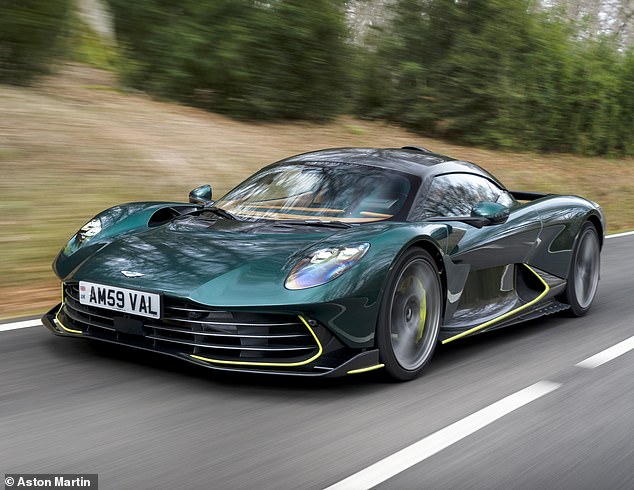
This isn’t just any Aston Martin; it’s the marque’s first plug-in hybrid and its first series-production mid-engined supercar. The Valhalla has been a seven-year labour of love, undergoing numerous revisions to reach its current, breathtaking form. It’s already garnered a dedicated following, with celebrity chef Gordon Ramsay being an early, proud owner. Even the silver screen has played host to a precursor of the Valhalla, gracing the last James Bond film, ‘No Time to Die,’ as a potential 007 vehicle, marking Daniel Craig’s final outing as the iconic spy. Now, it was my turn to experience its formidable capabilities, first on the track and then on the open road.
The Exclusive Realm of the Valhalla
Let’s be frank: for most of us, owning a Valhalla is as likely as winning the lottery and then immediately investing it all in a single, ultra-rare collectible. All 999 of these exquisite super-coupes are already spoken for, snapped up by a global clientele with the wherewithal to match their desires. Yet, much like appreciating haute couture, a masterpiece of art, or a luxurious escape, we can still marvel at the engineering prowess and dream of what it must be like.
Mastering the Entry: A Ritual of Access
Climbing into the Valhalla is an experience in itself, a subtle challenge that requires a certain finesse. You sit noticeably lower than in most cars, with a more intimate connection to the asphalt. This necessitates mastering specific techniques, akin to the lessons in deportment once taught to young ladies on how to elegantly alight from a vintage sports car.
To enter the driver’s seat, particularly if you’re wearing a helmet, requires a deliberate manoeuvre. You must lean in and forward, grasping the far side of the sculpted sports seat before smoothly sliding in, carefully distributing your weight. Exiting is a similar exercise in controlled motion, involving a roll and a pull upwards, leveraging the magnificent, wing-like doors for support. It’s an impromptu workout for your core muscles, to say the least.
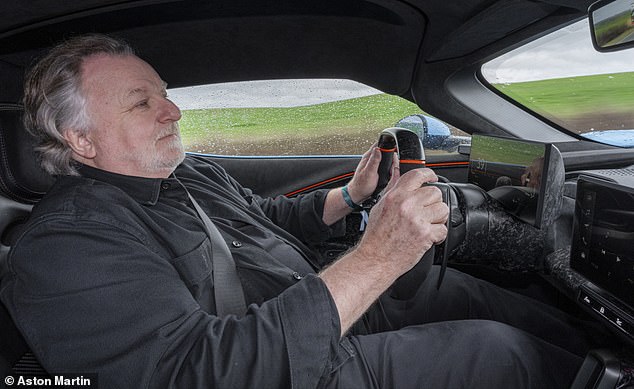
As if summoned by the sheer anticipation, the heavens finally relented, the rain abating just as I was snugly ensconced in the racing-style cockpit at the Navarra circuit, nestled amidst rolling rural hills. For those with a more generous physique, the high-backed, encompassing sports seats might feel a tad snug, but for the well-proportioned, they offer a secure embrace. With the start button engaged, it was time to awaken the beast.
A World Away from Your Average Hybrid
To truly grasp the Valhalla’s essence, consider this: it possesses a similar length and weight to a well-equipped, £40,000 Toyota Prius plug-in hybrid. However, the Valhalla achieves 0-62mph in a mere quarter of the Prius’s time – a blistering 2.5 seconds – and commands a price tag over 20 times greater, starting at £850,000 before the allure of bespoke customisation pushes the final figures north of £1 million. Indeed, Aston Martin’s Q Branch, their personalisation division, sees around 50 per cent of customers opting for extensive bespoke touches.
The Valhalla rides on 20-inch wheels at the front and larger 21-inch forged alloys at the rear. Its heart is a potent 828 horsepower, 4.0-litre twin-turbo V8 petrol engine. This is augmented by a high-power battery and three electric motors, collectively contributing an additional 251 horsepower, bringing the grand total to a mind-bending 1,079 horsepower. This hybrid powertrain enables that astonishing 2.5-second sprint to 62mph. For those seeking a moment of quiet contemplation, the Valhalla offers a zero-emissions electric-only range of approximately 9 miles at speeds up to 80mph. The intricate electric drive system comprises two twin EV motors on the front axle and one at the rear, seamlessly integrated into an all-new 8-speed dual-clutch transmission, controllable via paddle-shift or automatic selection. This sophisticated setup allows the car’s electronic brain to intelligently and instantaneously distribute power to individual wheels, optimising traction and performance whether navigating corners, accelerating hard, or tackling varied terrain.
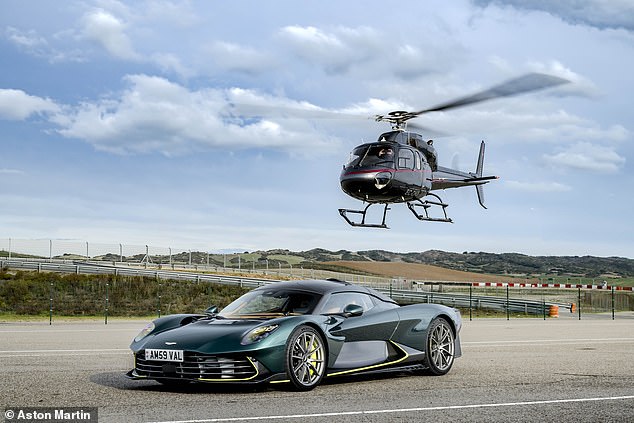
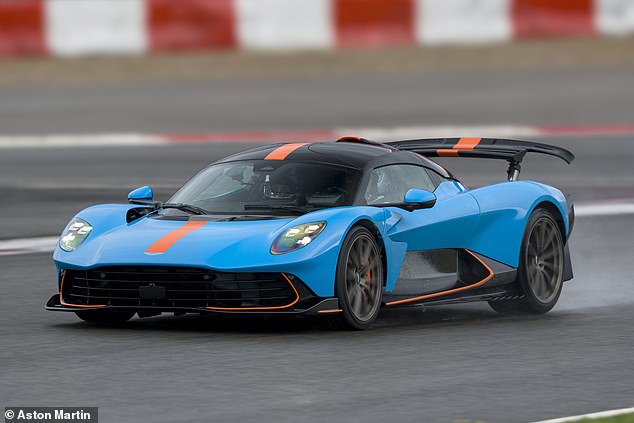
Unleash the Potential: On Track and Beyond
The Valhalla inherits its performance DNA from the even more extreme Aston Martin Valkyrie, a £2.5 million hypercar boasting a 6.5-litre V12 hybrid engine producing over 1,100 horsepower, and drawing heavily on Formula 1 racing technology. However, for those who cherish their driving licence, unlocking the Valhalla’s full potential truly requires the controlled environment of a racetrack.
At Navarra, I certainly pushed it to its limits. Foot flat on the straights, followed by decisive braking into tight corners. Even on the damp tarmac, the Valhalla remained remarkably planted, grippy, and exuded unwavering confidence.
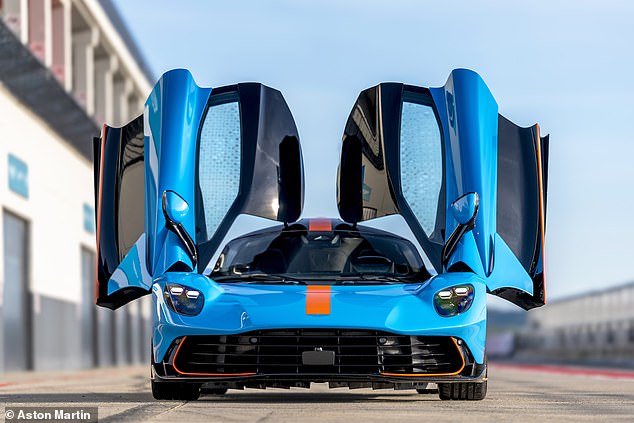
It was only when I swapped seats with Le Mans-winning race driver and Aston Martin test driver, Darren Turner, that I truly comprehended the car’s immense power and flawless balance. Even he, however, acknowledged the subtle influence of the wet conditions.
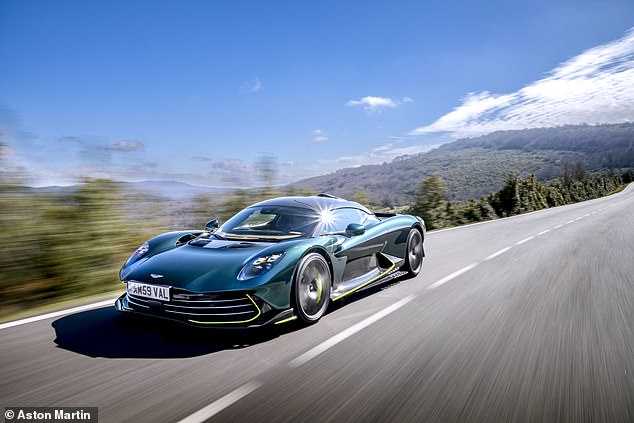
On public roads, the experience shifted to a more relaxed, yet still spirited, drive through the picturesque Spanish countryside. Surprisingly, the Valhalla exhibited commendable manners in towns and villages. It’s on the open roads and motorways, however, that more of its inherent ferocity can be cautiously unleashed – always mindful of the speed limits if you intend to keep your licence.
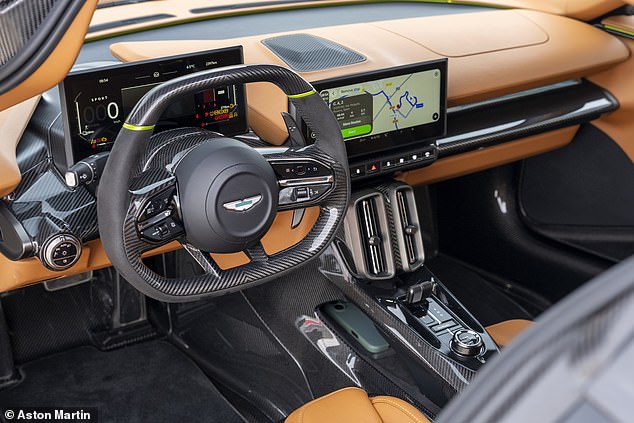
The Valhalla offers four distinct driving modes, selectable via a physical rotary dial:
- EV Mode: For near-silent, all-electric propulsion.
- Sport Mode: The default setting, engaging the hybrid powertrain for refined grand touring.
- Sport+ Mode: Delivers a more engaging and exhilarating performance, designed to flatter even less experienced drivers.
- Race Mode: Reserved for track use, offering maximum control for seasoned drivers.
Within Race mode, there are nine sub-settings that progressively disengage electronic stability aids. Aston Martin engineers have meticulously calibrated the chassis controls to mimic the feel of a rear-wheel-drive car. Interestingly, in EV mode, the Valhalla draws power exclusively from the front axle. Furthermore, there is no conventional ‘reverse gear’; instead, rearward movement is facilitated by the two front axle e-motors across all drive modes.
Aerodynamics: More Than Just Looks
The Valhalla’s dramatic aerodynamic styling and its carbon-fibre single-cell monocoque construction are not merely for aesthetic appeal; they serve a crucial functional purpose. The car’s active aerodynamics system is designed to keep it firmly planted, generating over 600kg of downforce at speeds between 149mph and 217mph. This is achieved by subtly adjusting the angle of attack of the front and rear wings. Electronic sensors continuously monitor this system, along with suspension, braking, steering, and powertrain data, to optimise dynamic ride characteristics. Aston Martin collaborated closely with Aston Martin Performance Technologies, the consulting arm of the Aston Martin Aramco Formula 1 Team, to fine-tune these elements.
In Race mode, the rear ‘T-Wing’ can be raised by 255mm to maximise downforce. In EV, Sport, and Sport+ modes, the rear wing retracts, preserving the Valhalla’s sleek silhouette. The ‘E-boost’ function provides the driver with an immediate surge of extra power. Additionally, in Race mode, the car’s formidable carbon-ceramic brakes are augmented by the active aerodynamics, creating an ‘airbrake’ effect akin to a parachute to decelerate the vehicle rapidly. Regenerative braking plays a vital role, recapturing energy and storing it as electrical charge.
The Allure of Personalisation
Since its initial concept unveiling at the 2019 Geneva Motor Show, through an early production version shown at Silverstone in 2021, the final production model revealed in 2024 marks the culmination of the Valhalla’s extensive development journey. For those fortunate enough to be acquiring one, the temptation to personalise is strong. Some of the most popular optional extras, adding to the £850,000 base price, include:
- Painted exterior graphics pack (starting from £10,100)
- Magnesium wheels (£18,500)
- Twill carbon interior trim (£12,200)
- Ultrafine wings badge (£7,600)
- Painted interior accent colour (starting from £1,100)
Aston Martin CEO Adrian Hallmark aptly summarised the Valhalla’s proposition: “On paper and on-track, Valhalla delivers the most driver-focused, technologically advanced supercar with true hypercar performance, yet on the road, it is as usable and enjoyable as any Aston Martin.”
The Verdict: A Hypercar with Drama
The Aston Martin Valhalla is undeniably a car that commands attention, even in the most challenging weather. My initial apprehension gradually gave way to growing confidence as the rain subsided and my familiarity with the car deepened. However, it remains a far cry from an everyday family vehicle.
Aston Martin has faced a challenging period recently, announcing significant job cuts. Amidst these difficulties, the Valhalla represents a beacon of innovation and performance. If only one had a spare million pounds lying around, this extraordinary machine could be the ultimate acquisition.



















