Black Canyon’s Wandanya: A Pilbara Manganese Gem Ignites ASX Excitement
The Australian Securities Exchange (ASX) has a new contender generating significant buzz, and it’s not just another speculative junior. Black Canyon (ASX:BCA) is rapidly positioning itself as a serious player in the manganese sector, thanks to its burgeoning Wandanya discovery in the resource-rich Pilbara region of Western Australia. This isn’t just about exploration anymore; Wandanya is shaping up to be a potentially low-cost, buildable project, offering shallow, high-grade manganese with the allure of Direct Shipping Ore (DSO) potential and even the possibility of iron ore by-products.

What truly sets Wandanya apart is its immense scale and the early indications of its simplicity. Black Canyon has so far only tested approximately 3 kilometres of a projected 9-kilometre mineralised system. This leaves a vast expanse of untapped potential, with significant room for growth in all directions. The company is strategically capitalising on this, with plans for further drilling, the establishment of a maiden resource estimate, and preliminary economic studies to be undertaken over the coming year.
The Wandanya Advantage: Grade, Simplicity, and Scale
The grades encountered at Wandanya are proving to be exceptionally rare, drawing comparisons to the long-established Woodie Woodie mine, a benchmark for manganese operations in Australia. Black Canyon is distinguishing itself from the typical small, speculative explorers that often populate the manganese landscape by focusing on fundamental project strengths: scale, operational simplicity, a clear route to market, and crucially, cost-effectiveness.
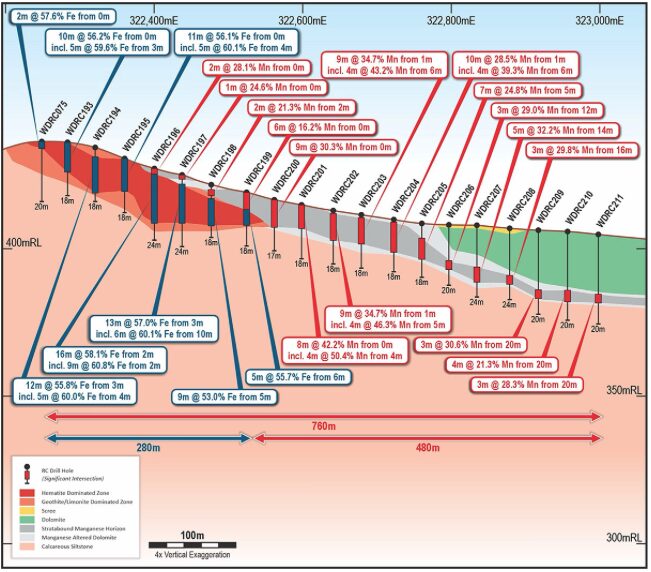
Early drilling results have been highly encouraging, consistently intersecting manganese grades of around 30%, predominantly at shallow depths of less than 20 metres. This shallow mineralisation is a significant de-risking factor, simplifying extraction and reducing potential capital expenditure. Managing Director Brendan Cummins highlighted the company’s immediate focus: “The immediate focus now is proving scale, simplicity and (a) credible route to market for the Wandanya discovery.” He further emphasised the importance of de-risking pre-development activities, stating, “De-risking pre-development activities is really important as well, because through that process you are adding value by increasing confidence and minimising investment risk, which is how you get a project funded and ultimately built.”
Simplicity Sells: A Streamlined Path to Production
The project’s inherent simplicity is a key selling point for Black Canyon. Cummins points out that bulk commodities such as manganese and iron ore present significantly simpler processing requirements compared to more complex minerals like gold or rare earths. This distinction is often the deciding factor between a project that successfully moves into production and one that languishes in the exploration phase.
“The real benefit with bulk commodities like manganese and iron is that the capex is typically low and achievable, reflecting the simplicity of the mining and processing,” Cummins explained. “It is early days, but typically a capex range between A$50-80 million might be expected to build a project like Wandanya, which is very achievable for a company of our size.”
This realistic approach to capital expenditure forms the core of Black Canyon’s strategy. The company is not aiming for overly ambitious, unachievable targets. Instead, the focus is on developing a manageable, low-cost project that can be financed through a combination of debt, equity, or strategic partnerships. “The financing options for a low capital project that could produce high-quality manganese and iron products are wide,” Cummins noted. “We will look at these options, but what comes to mind would be debt/equity or offtake prepayments with financing potentially from strategic partners.”

The “Free Set of Steak Knives”: Iron Ore Upside
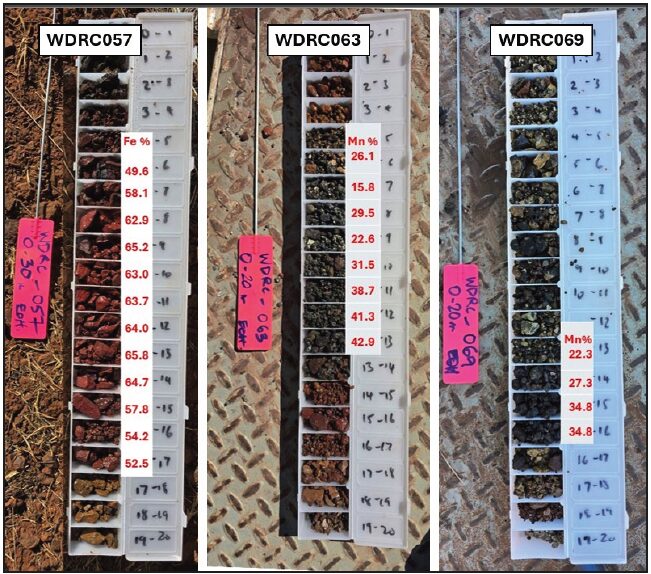
Adding another layer of intrigue to the Wandanya discovery is the presence of shallow iron enrichment running parallel to the manganese mineralisation. Initial surface rock chip samples have returned impressive iron grades of 64%-65% Fe. Cummins astutely described this iron component as a “free set of steak knives,” an unexpected bonus atop the primary manganese opportunity.
Early metallurgical testwork suggests that Black Canyon may be capable of producing both DSO manganese and iron ore products with low impurity levels. Furthermore, there is potential to upgrade lower-grade manganese, enhancing the overall value proposition. For investors, this dual commodity potential translates to significant upside without the need for discovering entirely new deposits.
A Rare Find in a Sought-After Region
The significance of the Wandanya discovery is amplified by its rarity within Western Australia’s manganese exploration landscape. Cummins expressed gratitude for the find, noting that “We have been very fortunate with the Wandanya discovery considering many companies have been exploring for manganese for decades in the region and Wandanya was never mapped or sampled with rock chips, let alone drilled.” He proudly declared it a “genuine greenfield discovery, found using traditional exploration techniques like satellite imagery, prospecting and mapping.”
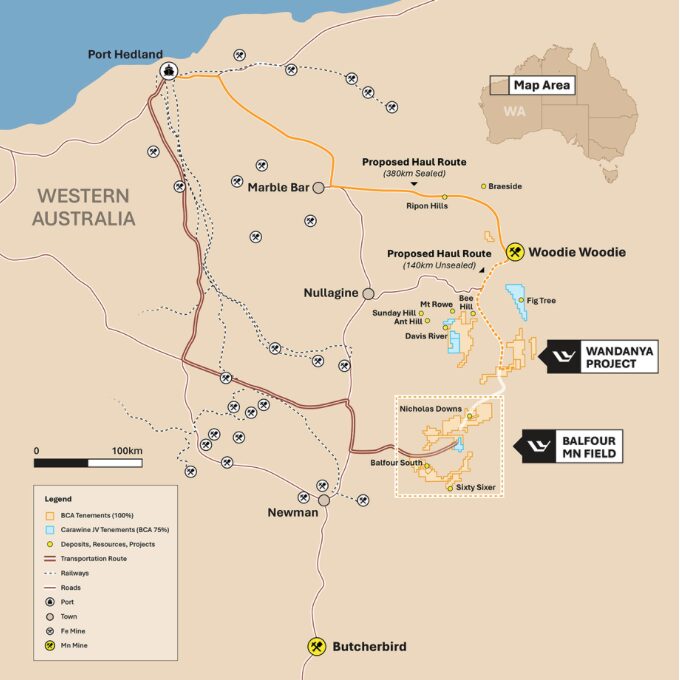
This discovery stands apart from other finds in the region. While Black Canyon has previously identified larger manganese deposits in the Balfour Manganese Field, these typically exhibited higher tonnages but lower manganese grades. “In the last 5 years Black Canyon has found the largest manganese deposits in WA across the Balfour Manganese Field, which have higher tonnages but lower manganese grades,” Cummins stated. “Once we drilled Wandanya in late 2024, we recognised the significance of the discovery.”
Market Tailwinds: Global Manganese Dynamics
Beyond the project’s intrinsic merits, Black Canyon is benefiting from favourable global market dynamics for manganese. While there isn’t an immediate global shortage of manganese units, supply is heavily concentrated. Australia, with its high-quality oxide ore and advantageous freight distances to key consumers like China, possesses significant structural advantages.
However, a growing trend of resource nationalism among major manganese producers, particularly in Africa, is casting a shadow over supply security. Gabon, a significant global producer, has signalled its intention to ban crude manganese exports from 2029, a move that could tighten the availability of high-grade oxide ores for smelters worldwide. This geopolitical risk, coupled with the market’s sensitivity to even short-term supply disruptions, as evidenced by past disruptions to Australian operations, creates a strong backdrop for Australian manganese producers.
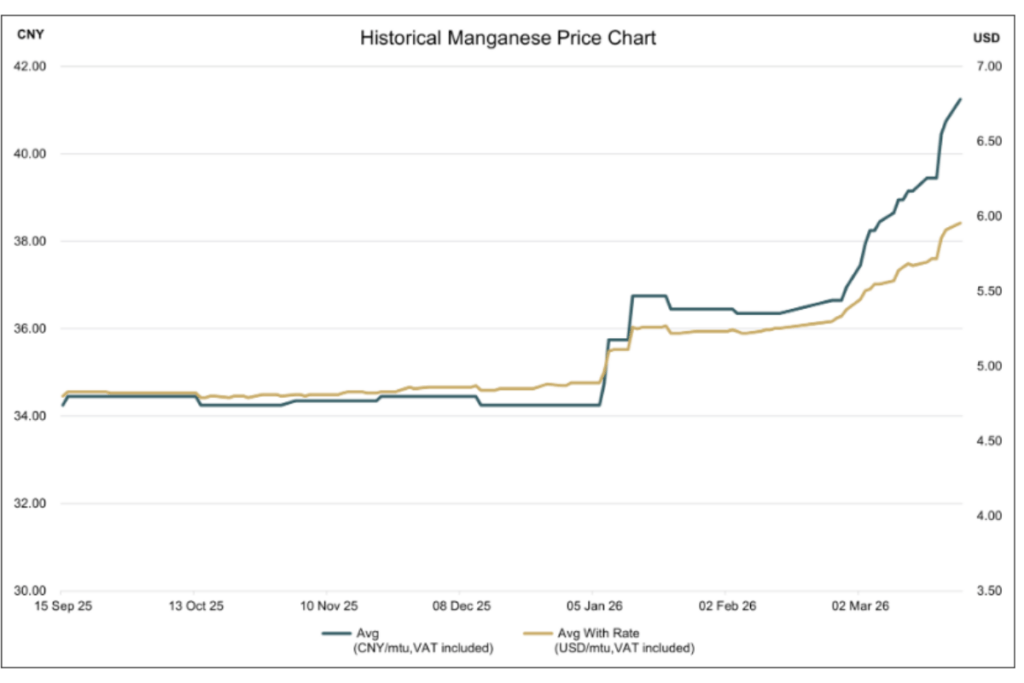
If current price trends persist, Australian manganese projects are likely to attract increased investor attention, particularly those with compelling fundamentals like Wandanya. Black Canyon has already garnered support from influential funds, including Rusty Delroy’s Nero Resource Fund, John Forwood’s Lowell Resources Fund (ASX:LRT), Perennial, and Cranport, indicating growing confidence in the company’s story.
The Road Ahead: From Discovery to Bankability
Black Canyon’s immediate strategic imperative over the next 12 to 18 months is clear: solidify the discovery and transform it into a bankable project. The company has already completed over 6,500 metres of drilling and plans to significantly expand this to 20,000 metres through continued infill and step-out drilling. The ultimate goal is to establish a maiden resource and demonstrate that the current 3-kilometre strike is merely the beginning of a much larger system.
“We aim to continue driving value for our shareholders,” Cummins affirmed. “So over the next 12 to 18 months we will apply that capital efficiently to expand the discovery, undertake resource estimation and complete a financial evaluation that we anticipate will demonstrate a strong case for developing Wandanya, which in turn will drive the company valuation.”
The potential for further expansion is substantial, with an estimated 4.2 kilometres of undrilled strike to the north and another 1.8 kilometres to the south, all underlain by the same favourable geology. Complementing the drilling program, Black Canyon is also initiating baseline environmental studies, logistics and transport assessments, and more detailed metallurgical testwork as part of its comprehensive de-risking strategy.
Investors will be closely watching for three key developments: continued demonstration of the project’s scale, increasing confidence in its economic viability, and concrete evidence that Wandanya can indeed be developed into a producing mine. If these crucial elements align, Black Canyon could well emerge as a rare success story on the ASX – a junior explorer poised to become Australia’s next significant manganese producer.