

































The Unseen Depths: George Eliot’s Foray into Science Fiction and the Science of the Mind
George Eliot, the esteemed pen name of Victorian novelist Mary Ann Evans, is primarily celebrated for her masterful realist works, including classics like Adam Bede, The Mill on the Floss, Middlemarch, and Daniel Deronda. However, an often overlooked facet of her literary output reveals a fascinating engagement with speculative thought. In 1859, as her career as a novelist was taking flight, Eliot published a short work of science fiction titled The Lifted Veil.
While Mary Shelley’s Frankenstein is frequently cited as the progenitor of science fiction, the term itself was not widely in use during the mid-1800s. At that time, it generally described literature that explored contemporary scientific ideas, only later evolving into a genre term in the late 19th century, applied to the visionary works of writers like Jules Verne and H.G. Wells. The Lifted Veil aligns with both interpretations of science fiction, challenging our perception of Eliot solely as a realist and offering profound insights into the scientific underpinnings of her later, more famous novels.
The narrative of The Lifted Veil unfolds through the first-person account of a man named Latimer, who is documenting his life story with the foreknowledge of his imminent death. Following a severe illness in his youth, Latimer’s sensory perception becomes unnaturally heightened, granting him the unsettling ability to access the thoughts of others and glimpse the future.
Crucially, Latimer’s extraordinary faculties are not presented as the product of technological advancement. Instead, he finds himself compelled to pursue a scientific education to compensate for his perceived “sensitivity and impracticality,” all while secretly indulging in poetry and literature. He describes his heightened sense as akin to a “preternaturally heightened sense of hearing, making audible a roar of sound where others find perfect stillness,” a profound sensitivity born from a poetic soul lacking a direct outlet.
Sympathy, Literature, and the Human Psyche
A cornerstone of Eliot’s realist philosophy was the concept of sympathy. Her early life was marked by intense evangelical fervour, leading her to shun secular pleasures like theatre and popular novels, save for the works of Sir Walter Scott. However, in her twenties, her religious convictions shifted. Influenced by German philosophy, which she diligently translated, Eliot came to view human relationships as the very foundation of morality.
For Eliot, personal growth, both intellectual and moral, was intrinsically linked to expanding one’s perspective beyond the confines of individual experience and immersing oneself in the lives of others, particularly those vastly different from oneself. She championed literature, especially the realist novel, as an unparalleled tool for cultivating empathy, capable of engaging both the intellect and the emotions. Her meticulous portrayal of characters’ inner lives, a hallmark of her realism, stands in contrast to what she perceived as the “frequently false psychology” of writers like Charles Dickens.
In Middlemarch, Eliot masterfully illustrates this theme. The novel’s dramatic tension often arises from characters’ misinterpretations of one another, their inability to truly penetrate the inner workings of another’s mind. The narrator poignantly observes that possessing a truly profound understanding of ordinary human existence would be overwhelming, leading one to “die of that roar which lies on the other side of silence.”
A prime example of this is the ill-fated union of the idealistic young doctor Lydgate and the beautiful Rosamond. Lydgate’s perception of women, shaped in part by popular literature, leads him to conflate Rosamond’s outward charm with her inner character, blinding him to her inherent egoism and superficiality. His romanticised thoughts of her, imbued with the flowery language of romance, foreshadow the marital disaster that ensues, marked by a fundamental “missing of each other’s mental track.”
The Interplay of Science and Evolution
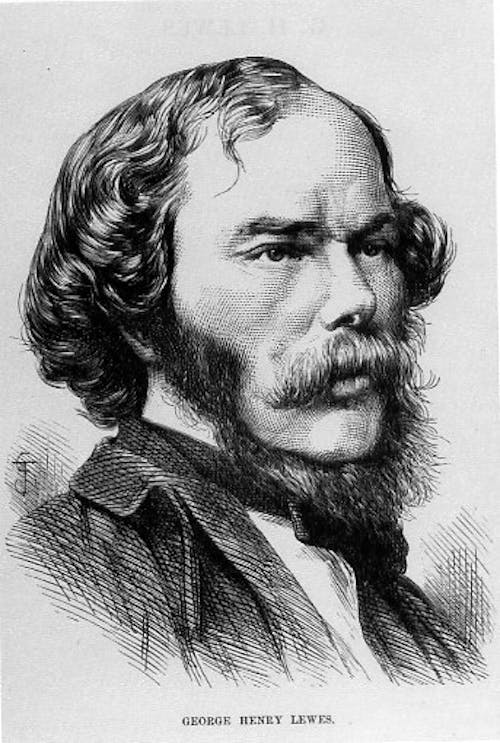
Eliot’s intellectual appetite was vast, evidenced by her extensive reading in history, theology, classics, poetry, philosophy, and significantly, geology, physiology, and evolutionary theory. Her partner, George Henry Lewes, was a prominent figure in the emerging field of physiological psychology, deeply influenced by Darwin’s evolutionary theories. Lewes’s work explored the intricate connections between neural processes, senses, emotions, mental imagery, and language. It is in Lewes’s writings that variations of the phrase “stream of consciousness” first appear, a concept later widely attributed to other authors. Eliot and Lewes engaged in a mutually influential dialogue regarding their understanding of psychology.
Eliot’s realist novels were intrinsically connected to the scientific discourse of the 19th century. Contemporary critics sometimes took issue with her use of scientific language and metaphors. A review of Middlemarch in The Spectator from 1872 noted: “We all grumble at Middlemarch; we all say that the action is slow, that there is too much parade of scientific and especially physiological knowledge in it.”
Undeterred by such criticism, Eliot’s writing offered a unique perspective on the simultaneous familiarity and strangeness of 19th-century science, hinting at its uncanny resonance with fictional narratives. In her final novel, Daniel Deronda, she draws a direct parallel between speculative literary endeavours and scientific hypothesising: “Men can do nothing without the make-believe of a beginning. Even science, the strict measurer, is obliged to start with a make-believe unit.” This statement serves as a prelude to the novel’s experimental structure, which commences in medias res.
Psychology and Literature: A Symbiotic Relationship
The term “psychology” in the 19th century encompassed a spectrum of philosophical and physiological approaches to understanding the mind and brain. Literary scholar Sally Shuttleworth has extensively documented the reciprocal influence between literature and psychology during this era, noting that Eliot’s novels were frequently employed as case studies in psychological texts.
Medical and physiological psychology publications of the time grappled with fundamental questions, such as the physical location of the soul and whether conscience possessed a distinct “ganglionic centre in the brain.” Even as psychiatric practitioners, then known as “mental scientists,” acknowledged the limitations of their empirical knowledge, they often turned to speculative frameworks, drawing from philosophy and theology to address these intellectual lacunae.
The Lifted Veil vividly explores the hypothetical possibility of accessing what lies “on the other side of silence”—that is, fully comprehending the inner lives of others. Latimer’s precognitive abilities are initially triggered by language; the mere utterance of the word “Prague” conjures a cascade of mental images and associations, precipitating his first vision of the future. He experiences the thoughts of others as intrusive, fragmented “obtrusions” upon his consciousness, describing it as “a stream of thought rushed upon me like a ringing in the ears not to be got rid of.”
However, rather than fostering human connection, Latimer’s powers devolve into a source of Gothic melodrama, stripping his life of any element of mystery or uncertainty. His “superadded consciousness” grants him access to the inner worlds of those closest to him, but this revelation brings him “intense pain and grief.” He perceives the facade of polite conversation, affectionate gestures, and kind deeds as mere coverings for a chaotic undercurrent of “frivolities, suppressed egoism, struggling chaos of puerilities, meanness, vague capricious memories, and indolent make-shift thoughts.”

Latimer becomes fixated on a woman named Bertha, the sole exception to this unsettling clarity. The blend of uncertainty and physical attraction he experiences fuels a profound infatuation. He finds himself capable of observing her expressions, speculating on their meaning, and asking for her opinions with genuine curiosity, experiencing “hope and fear” in anticipation of her responses.
Ultimately, however, no true affinity exists between them. Bertha is depicted as “keen, sarcastic, unimaginative, prematurely cynical,” and dismissive of the literature Latimer cherishes. This sole remaining element of mystery dissipates when Latimer finally penetrates Bertha’s inner self, only to find it a “blank prosaic wall”—perhaps the “negation of her soul” that had previously eluded his insight. Bertha’s growing suspicion that Latimer possesses an uncanny knowledge of her innermost thoughts only amplifies her animosity.
Eliot penned The Lifted Veil at a time when the nascent genre of science fiction was beginning to explore potential future scientific advancements. The story possesses elements of this speculative spirit. During his school years, Latimer forms a friendship with Charles Meunier, a youth consumed by intellectual curiosity in science. Meunier reappears at the novel’s conclusion as a distinguished scientist specialising in the “psychological relations of disease.” He is present when Bertha’s maid, Mrs. Archer, falls gravely ill. Meunier requests Latimer’s permission to conduct an experimental procedure. While human blood transfusions were an emerging medical technique in the 19th century, Meunier intends to wait until after Mrs. Archer’s death to transfuse his own blood into her arteries.
The transfusion momentarily revives Mrs. Archer, allowing her to expose Bertha’s premeditated plot to poison Latimer. This extraordinary event prompts Meunier to recognise that life encompasses more than mere “scientific problems.” In the end, Latimer’s ultimate motivation for recounting his story becomes clear: he seeks the reader’s sympathy, a connection he was unable to forge with those in his life.



















