

































Diving into the Frigid Unknown: Scientists Brave Arctic Ice to Study a Warming World
The biting cold of a remote Finnish lake, with temperatures plummeting to a staggering minus 40 degrees Celsius, is hardly a welcoming environment. Yet, it was here that diver Daan Jacobs recently emerged from the icy depths, surfacing through a meticulously carved hole in the thick, crackling ice. His 8-metre (26-foot) descent unveiled a hidden realm, where muted sunlight filtered through the Arctic ice and a surprising array of fish navigated submerged rock formations. This is a world rarely glimpsed, especially during the harsh Finnish winter, when heavy snow blankets the ice and the air itself seems to freeze.

Jacobs, a biodiversity adviser hailing from the Netherlands, is part of a burgeoning cohort of underwater explorers pushing the boundaries of human endurance and scientific inquiry. He recently participated in the Polar Scientific Diving class in northern Finland, an initiative spearheaded by the Finnish Scientific Diving Academy. This program is dedicated to cultivating the next generation of scientists and researchers equipped to conduct vital studies beneath the vast expanses of Arctic and Antarctic ice, investigating the unique flora and fauna that call these extreme environments home.
“The view is beautiful,” Jacobs commented, catching his breath after a demanding 45-minute dive.
The urgency behind such expeditions is underscored by the alarming reality of climate change. The Arctic is currently warming at a rate four times faster than the global average. This accelerated warming has far-reaching consequences, from disrupting global weather patterns to significantly impacting polar bear populations. These iconic creatures, reliant on sea ice for hunting seals, are facing shrinking hunting grounds, leading to a decline in their size and health. The escalating temperatures at the North Pole signal a potentially disastrous future for the entire planet.
Meanwhile, in Antarctica, global warming is driving the melting of immense ice sheets, contributing to rising sea levels and causing profound disruptions to delicate ocean ecosystems.
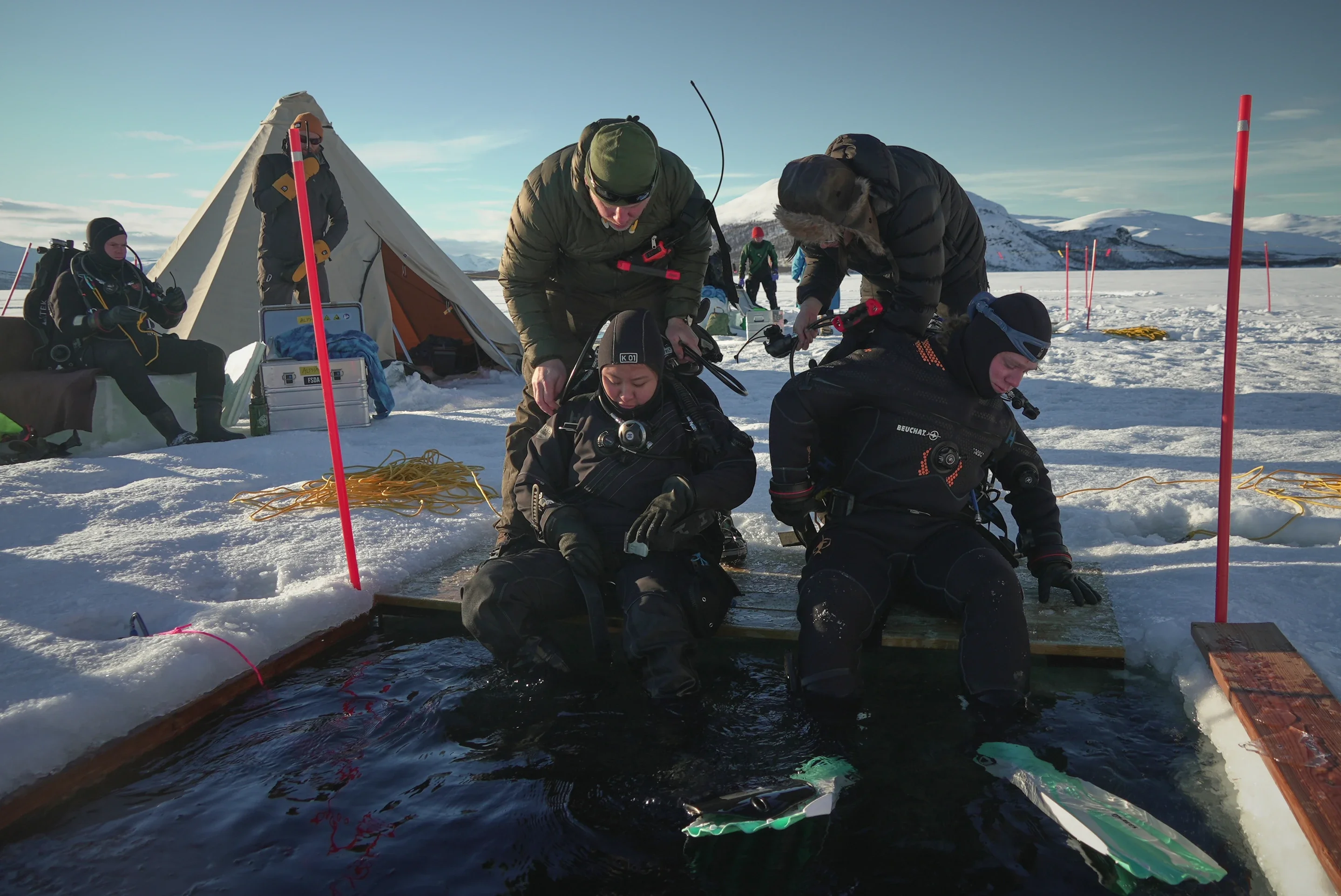
Consequently, the need for scientists to meticulously study the ecosystems hidden beneath the remaining Arctic and Antarctic ice has never been more critical. Understanding how climate change is affecting the plants and animals that have traditionally thrived on the seafloor, often in perpetual darkness, is paramount. However, undertaking such research demands highly specialised scuba diving skills coupled with a robust scientific background – qualifications that, according to experts, are held by only a few hundred individuals worldwide.
The Finnish Scientific Diving Academy’s program aims to not only increase the number of qualified divers but also to galvanise global attention to the urgent need for more research into the polar ice crisis.
“Because it is melting so fast, we need to have more people deployed there — more science to be done — to understand better what happens,” explained Erik Wurz, a marine biologist and one of the class’s esteemed scientific diving instructors. “We have to do more and we need to be fast to save this unique ecosystem in the Arctic, but also the Antarctic.”
In an era increasingly embracing automation and artificial intelligence, the value of human intervention remains indispensable for certain scientific tasks. Simon Morley, a marine biologist with the British Antarctic Survey, highlights that the delicate nature of polar seafloor habitats precludes the use of methods like dragging nets, which would cause irreparable damage. While remotely operated submersibles and robots can collect specimens, they are typically limited to retrieving only one at a time.
“A diver can go down and pick up 12 urchins, put them in a bag and not affect the rest of the system,” Morley noted, clarifying his non-involvement in the course.
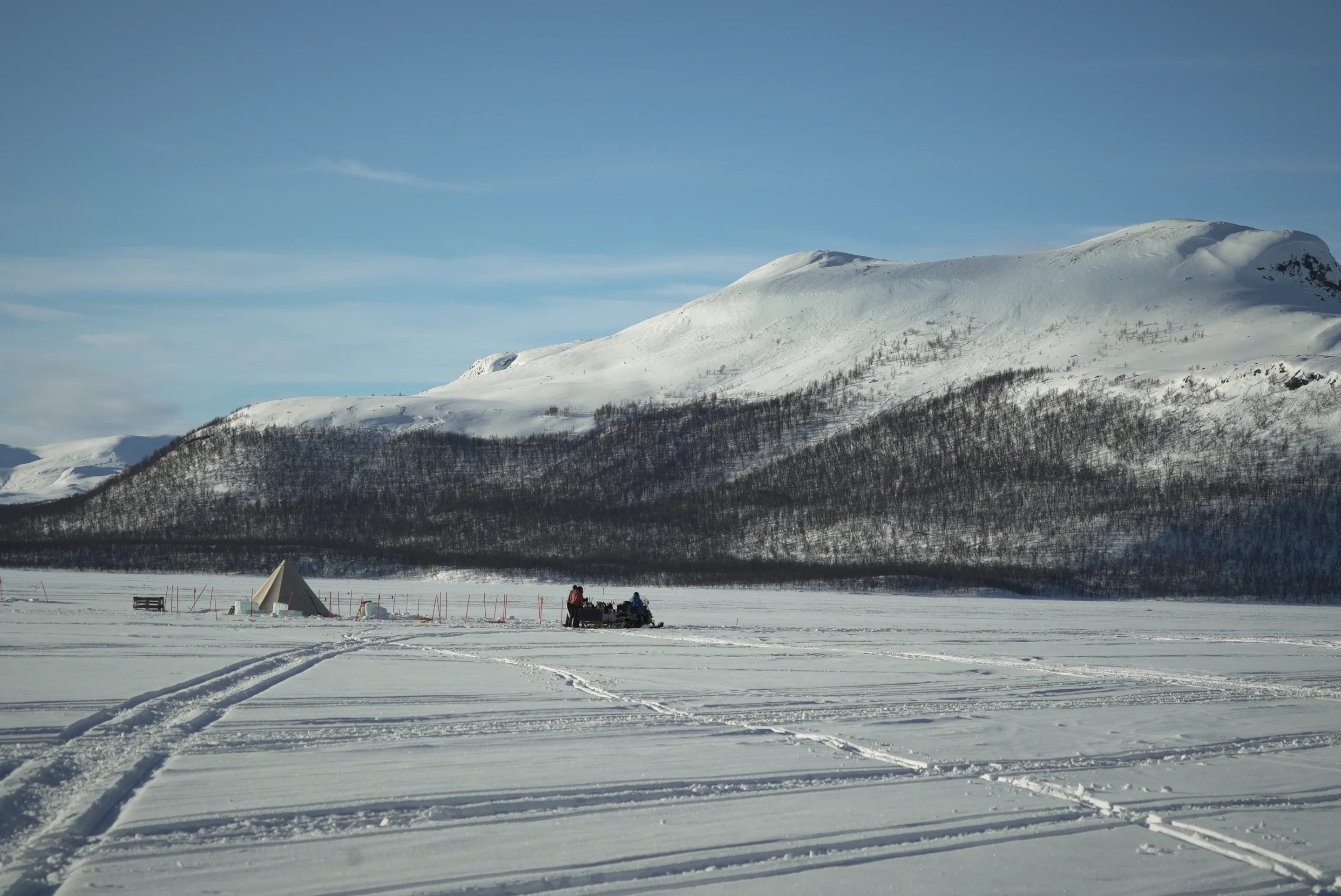
Each intensive 10-day session sees the academy’s experienced instructors rigorously training a dozen divers on a frozen lake at the University of Helsinki’s Kilpisjärvi Biological Station. Established in 2024, the program’s considerable demand has necessitated the addition of a second session annually.
The diverse group of participants comprises individuals from various scientific disciplines, including marine and freshwater biologists, alongside highly skilled recreational divers and accomplished documentary filmmakers.
Ruari Buijs, a marine biology and oceanography student at the University of Plymouth in England, harbours aspirations of conducting research on marine megafauna in Antarctica. He enrolled in this month’s polar diving class with the strategic aim of enhancing his employability upon graduation.
“I thought this would be a very good stepping stone toward that goal,” Buijs stated.
Similarly, Caroline Chen, a scientific diver and research assistant based in Germany, described her lifelong dream of diving in the polar regions. She is confident that the practical experience gained from this course will be invaluable in designing future experiments conducted under these exceptionally challenging conditions.
The students’ training extends far beyond mastering the art of diving beneath ice that can be nearly a metre (approximately three feet) thick, into water temperatures hovering just above freezing. The ordeal begins with the extreme frigid air temperatures and the relentless, whipping winds that sweep across Lake Kilpisjärvi.
This presents a significant challenge for the topside support team, who must operate essential equipment to ensure the diver’s safety while simultaneously contending with their own risk of frostbite. They also undergo training to act as safety divers, ready to respond in the event of an emergency, such as if the primary diver struggles to locate the ice hole for surfacing after their allotted time underwater.
Despite these formidable challenges, those who venture beneath the ice describe an unparalleled experience. During this month’s session, the group descended beneath ice approximately 80 centimetres (around 2.5 feet) thick. Chen recounted spotting various fish on the seafloor before pausing to gaze upwards. Sunlight streamed through the ice, creating an ethereal effect that she likened to another celebrated Arctic phenomenon.
“It looks insane from the bottom up,” Chen enthused. “It changes all the time, like the Northern Lights.”
Buijs offered a pragmatic observation about the cold, noting that while the submerged parts of a diver’s body remain relatively insulated, the area around the mouth is inevitably exposed.
“I think the worst thing is like your lips feel very numb afterward and they like stick out a lot,” he said with a laugh, playfully adding, “You kind of get Botox lips a little bit.”



















