


































The global geopolitical landscape, particularly recent events in the Middle East and the subsequent implications for vital shipping lanes like the Strait of Hormuz, has thrust the critical issue of national strategic oil reserves into the spotlight. For Australia, the figures emerging from this intense scrutiny paint a picture that, while concerning to some, is being defended by the government as having a deliberate rationale.

Australia’s Fuel Security: A Closer Look
The federal government has been proactive in reassuring the public about the nation’s short-term fuel security. While acknowledging that several shipments were initially impacted by global disruptions, they have confirmed that these have been replaced, with an additional three shipments secured. This suggests a robust immediate response to maintain supply lines.
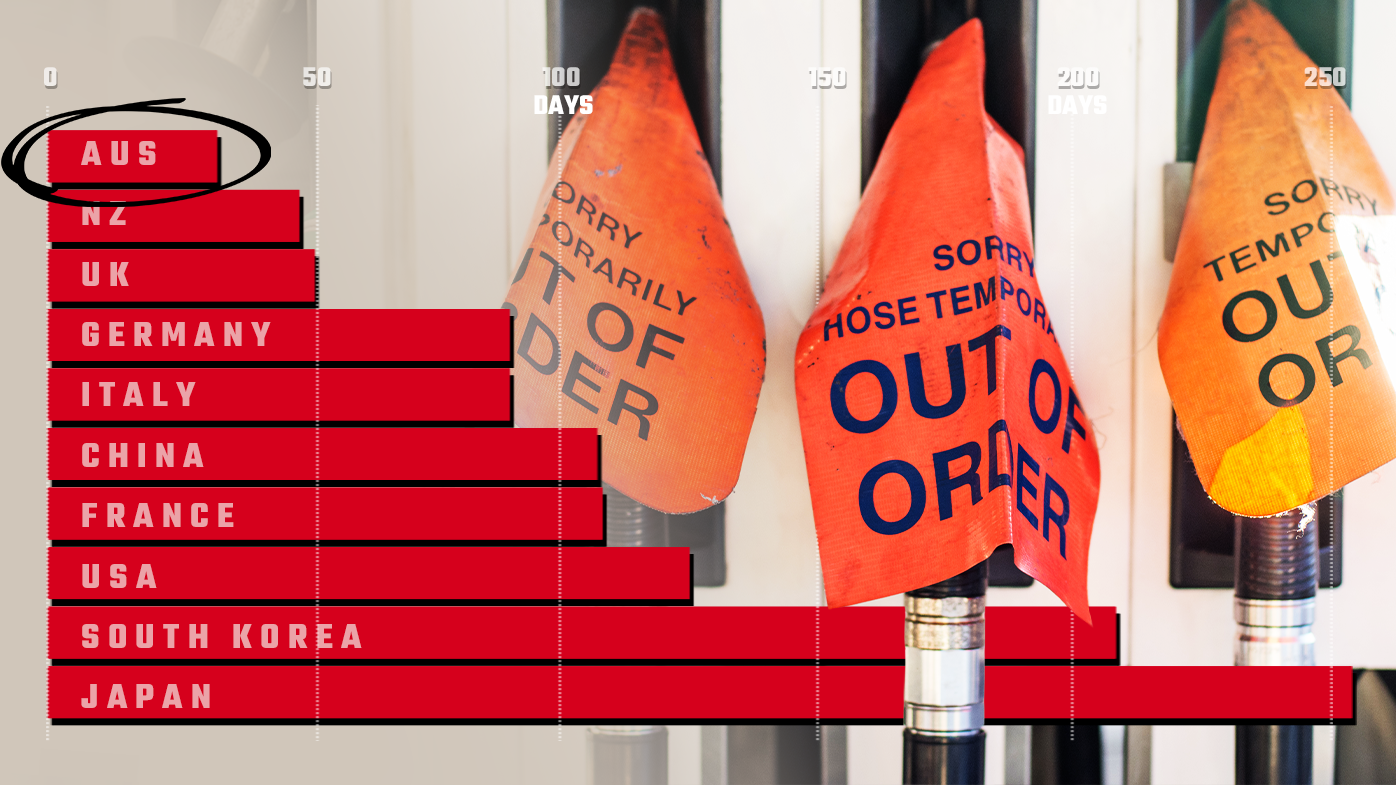
However, when examined against the backdrop of other developed nations, Australia’s domestic fuel reserves appear notably leaner. As a member of the International Energy Agency (IEA), Australia is bound by an obligation to maintain a minimum of 90 days’ worth of fuel reserves. Unlike many other IEA members, Australia does not maintain a centralised strategic stockpile. Instead, the responsibility for holding emergency reserves falls upon the oil companies themselves, who are mandated to keep a “minimum stock holding.”
As of the end of last year, these company-held reserves stood at:
- 38 days’ worth of gasoline
- 32 days’ worth of diesel
- 29 days’ worth of jet fuel
These figures fall significantly short of the IEA’s 90-day benchmark and have remained relatively consistent since the commencement of recent global conflicts.
International Comparisons: A Stark Contrast
The disparity becomes even more pronounced when compared to other developed economies:
- Japan: Boasts an impressive combined total of approximately 254 days’ worth of oil reserves held by both the government and private entities.
- South Korea: Maintains reserves equivalent to around 200 days.
- United States: Possesses the largest strategic reserve in the Western world, holding approximately 415 million barrels before recent global events – enough for about 125 days. This figure, while substantial, represents a decrease from earlier in the decade, following strategic releases to address market shocks. Beyond the strategic reserve, the US also holds an additional 439.3 million barrels in commercial, privately held reserves.
- China: While not releasing official figures, estimates from energy analytics firm Vortexa suggest China’s inventory could reach 1.13 billion barrels by the end of 2025, sufficient for over 100 days based on its daily import volume.
- European Nations: Countries like Italy and Germany legally require at least 90 days of oil reserves. France reported holding 108 days’ worth in early March.
- United Kingdom: Holds around 68 million barrels in its stockpile, estimated to cover 52 days of consumption, though some assessments place this figure closer to 90 days or more.
It’s important to note that Australia is not alone in having reserves below the 90-day mark. New Zealand currently holds less than 50 days, and Canada, a net oil exporter, is the only G7 member not required by the IEA to hold a strategic reserve.
The Australian Government’s Stance: Cost vs. Security
Despite not meeting the IEA’s 90-day obligation for over a decade, the Australian government, through Energy Minister Chris Bowen, has articulated a clear rationale for this approach. Minister Bowen has consistently argued that mandating 90 days of reserves within Australia would be prohibitively expensive and would not necessarily serve domestic needs effectively.
“Ninety days is not how much petrol is used,” Minister Bowen explained. “It’s a 90-day import days, and they can be held anywhere and it’s not for domestic supply. It’s to be able to sell it if things get rough and the IEA asks us to.”
He further elaborated on the financial implications: “Now, we don’t comply with that. But if we did try to keep 90 days’ worth in Australia, that would cost $20 billion over four years… that’s $20 billion we’re not spending on schools, hospitals or anything like that. So that’s a big, big call.” This significant financial commitment, he noted, is a primary reason why successive governments have shied away from implementing the 90-day requirement.
The government maintains that Australia is better prepared for potential disruptions now than it was prior to previous global energy crises. “We’ve got those 38 days of petrol, 30 days of diesel, 30 days of jet fuel and, you know, sure, people can say we need more, but it’s a lot more than we’ve had previously,” Minister Bowen stated.
Expert Perspectives: A Matter of Vulnerability
However, some industry experts and academics hold a different view. Professor Sajid Anwar from the University of the Sunshine Coast highlighted Australia’s exposure to global supply chain vulnerabilities. “Australia remains exposed to global disruptions because it imports a large share of its refined petroleum,” he commented.
Professor Anwar pointed out that while Australia sources its refined fuels from multiple suppliers in the Asia-Pacific region, such as Singapore, South Korea, and Japan, these locations are part of the same interconnected supply chain. Consequently, significant regional disruptions could still impact Australia’s fuel availability, even with diversified import sources. The current reserve levels, well below the IEA’s recommendation, are seen by some as a potential point of weakness in the face of such global volatility.



















